
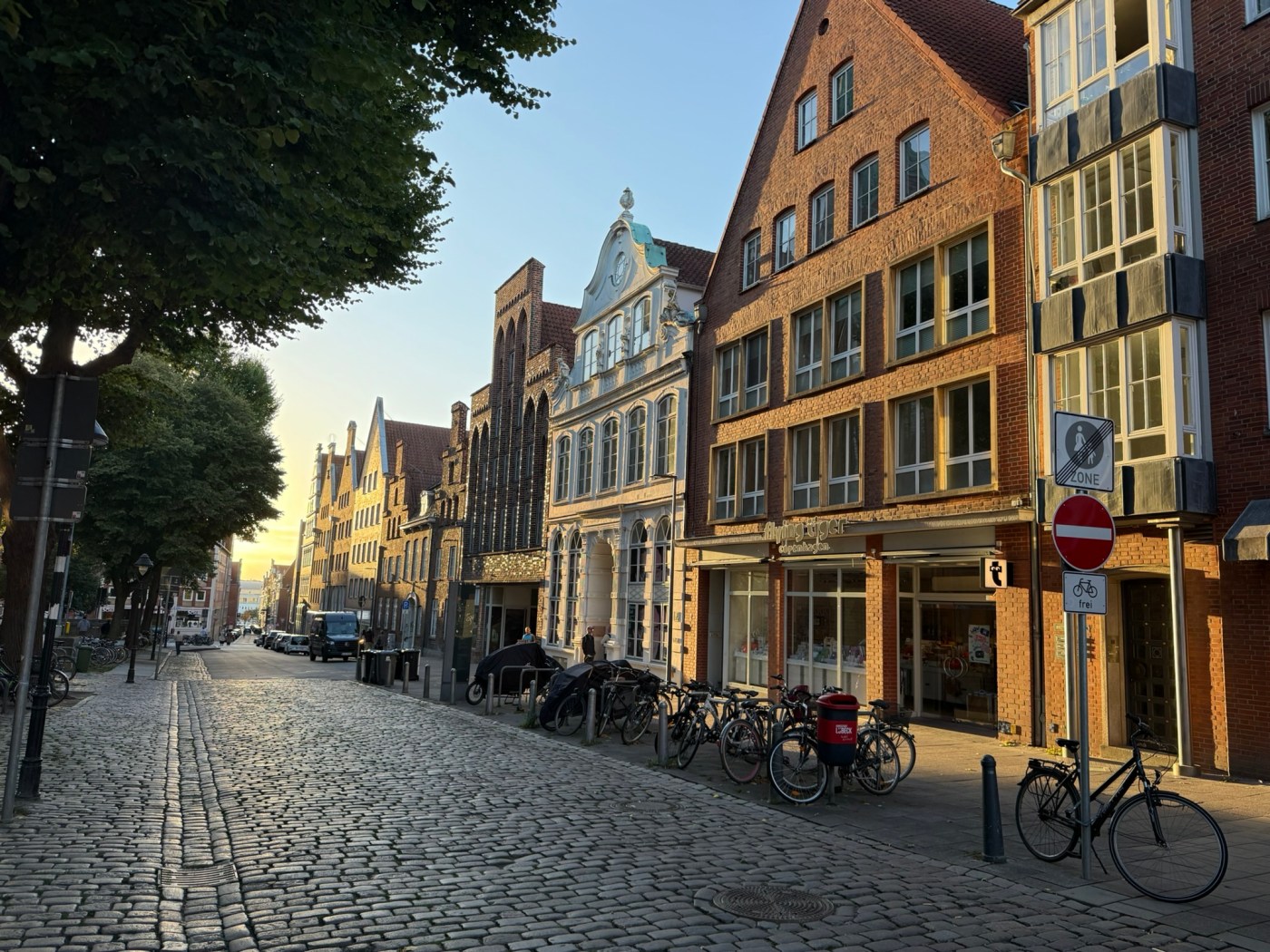
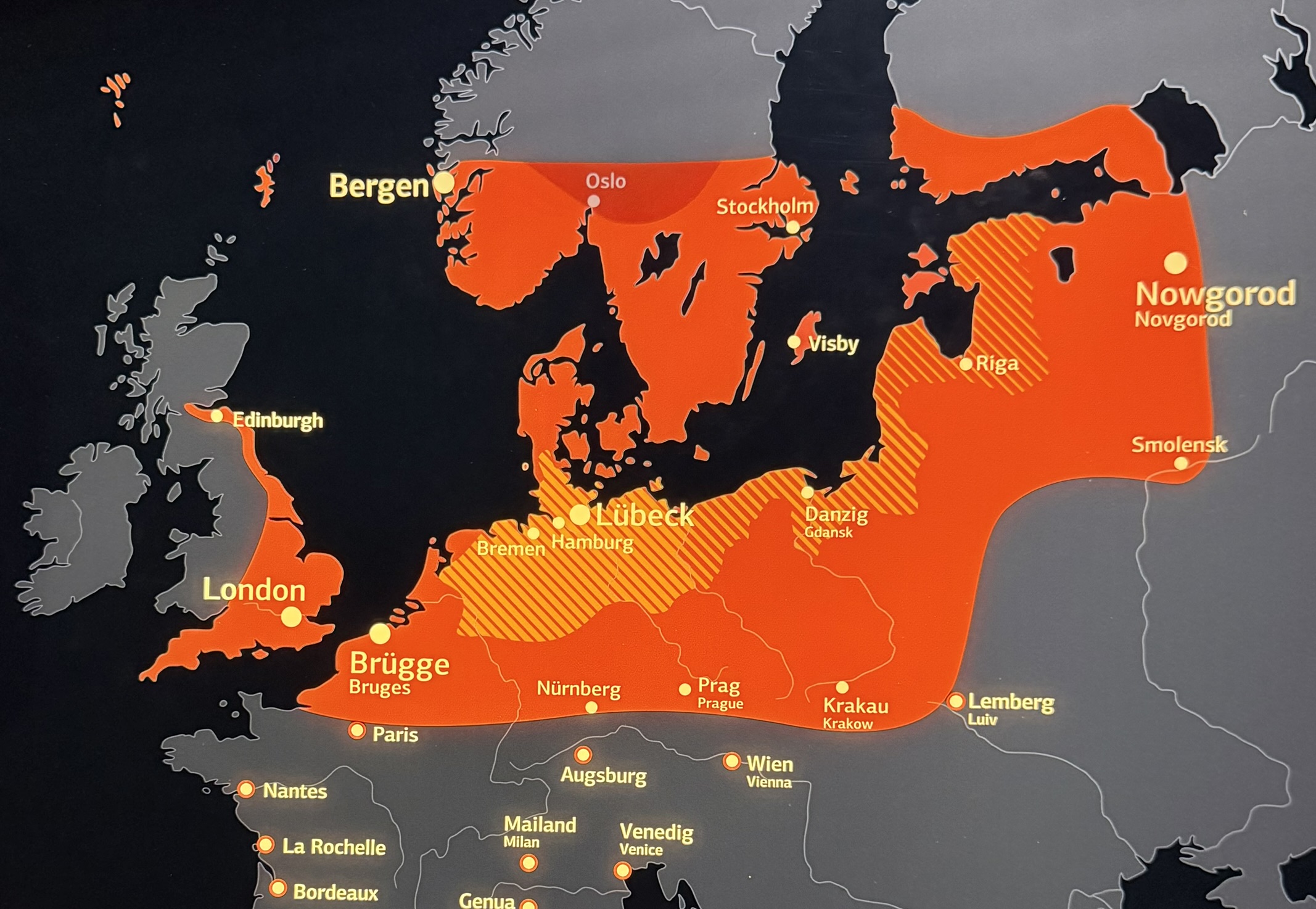
During the late Mediaeval period, a trading partnership developed between several towns and cities located on, or close to, the Baltic and North Seas. It became known as the Hanseatic League. Derived from the German word Hansa, meaning band or guild, it comprised primarily a trading relationship stretching from the Nerherlands to Estonia, whilst also incorporating merchants outside this area such as London. Some see it as a very early forerunner of the EU with its exclusive trading ties and regulations, as well as some degree of political integration. It thrived for over three centuries between 1300 -1600 before slowly disintegrating.
Gdansk
We began our journey in Gdansk, Poland’s main seaport on the Baltic Sea. Formerly known as Danzig when under German control, the city, like many in Poland, has had a turbulent history. It was returned to Polish control, and renamed Gdansk, in 1945, following the arrival of the Soviet army, after a huge bombing campaign which destroyed over 95% of the historical centre. During the 1950s and 1960s, much of the centre was rebuilt with the aim of recapturing the way Gdansk looked in the 18th century before it came under Prussian (German) influence, capturing how it might have looked at the time of the Hanseatic League.
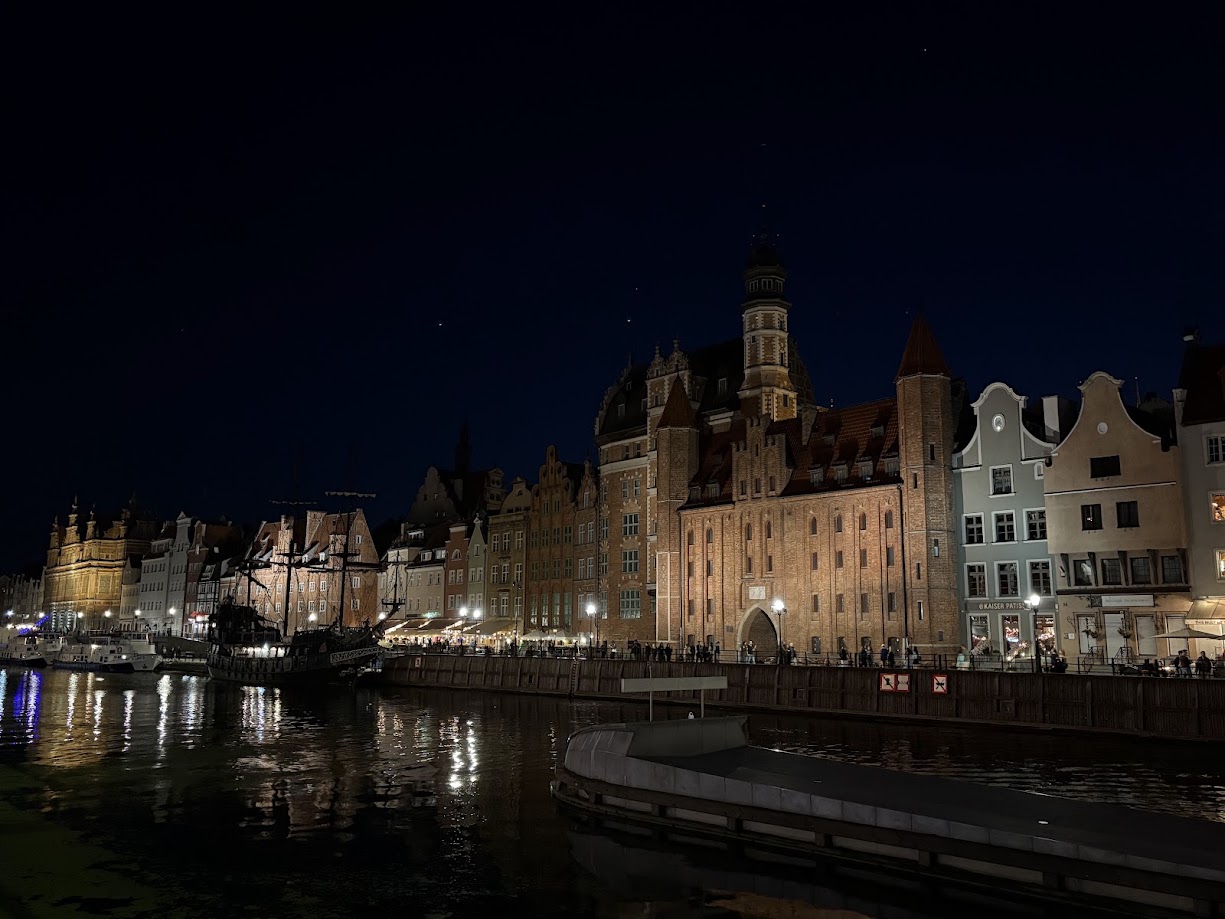
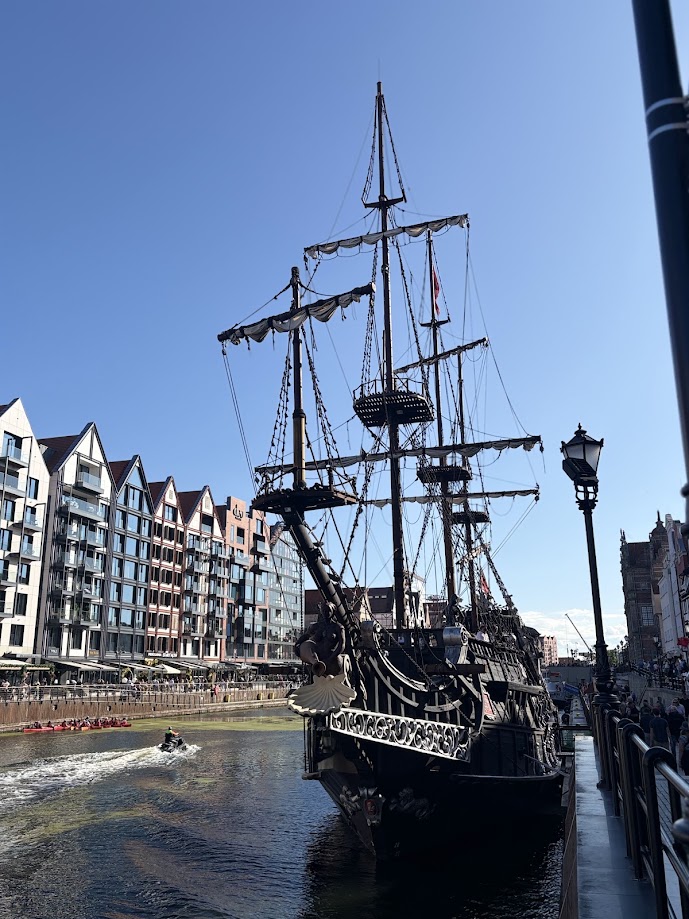
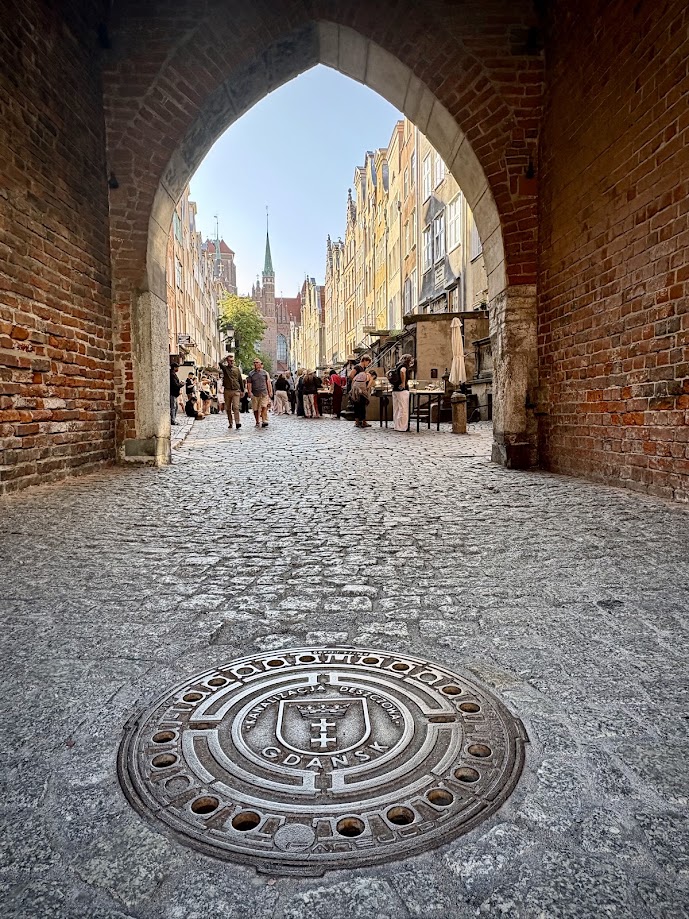
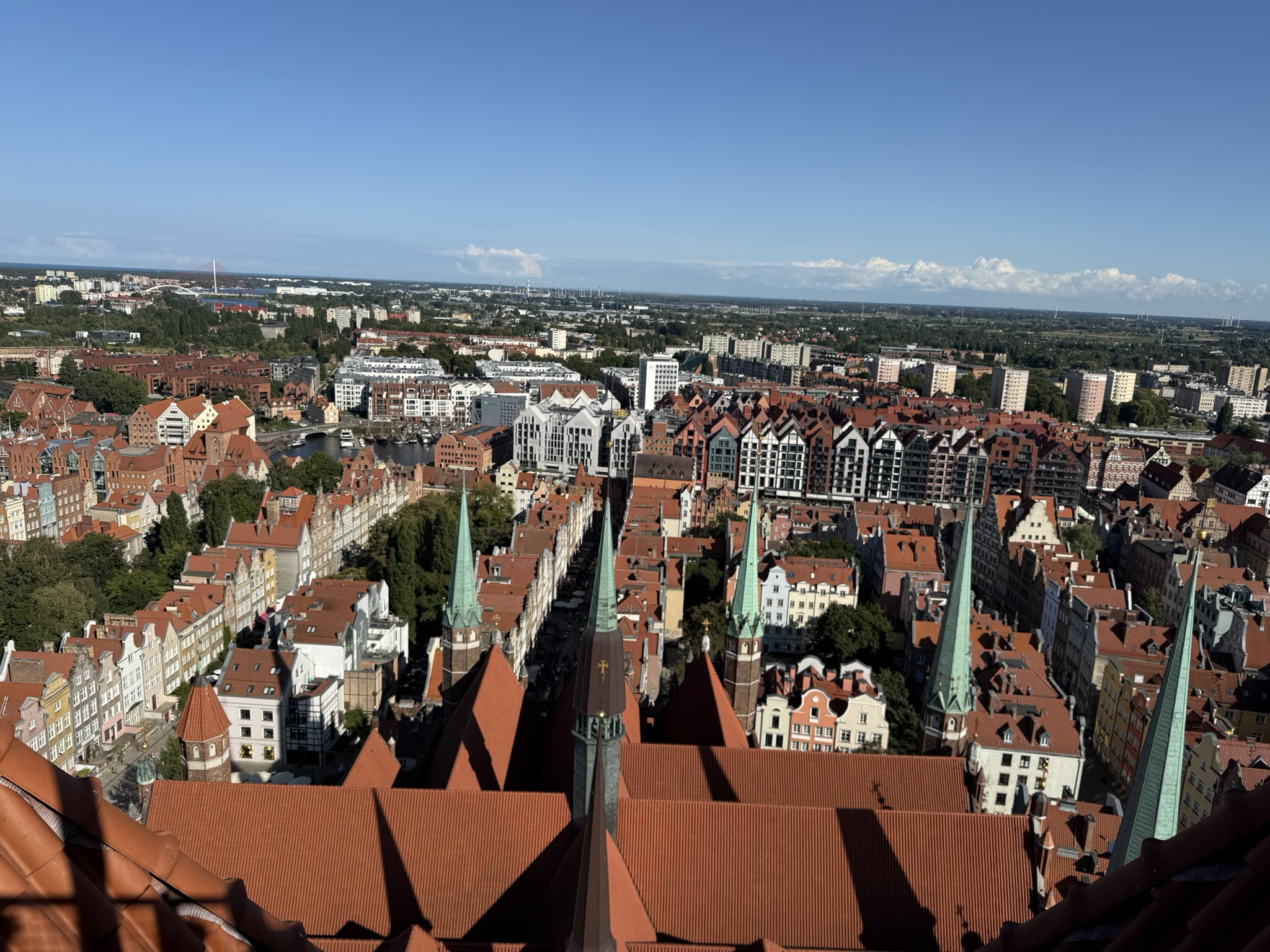
The restoration of the city to resemble how it would have looked centuries ago is an impressive achievement, but to some extent, like Dresden, which was restored to it s pre-war architectural glory after being falltened during the War, it feels like a living museum rather than an authentic modern city.
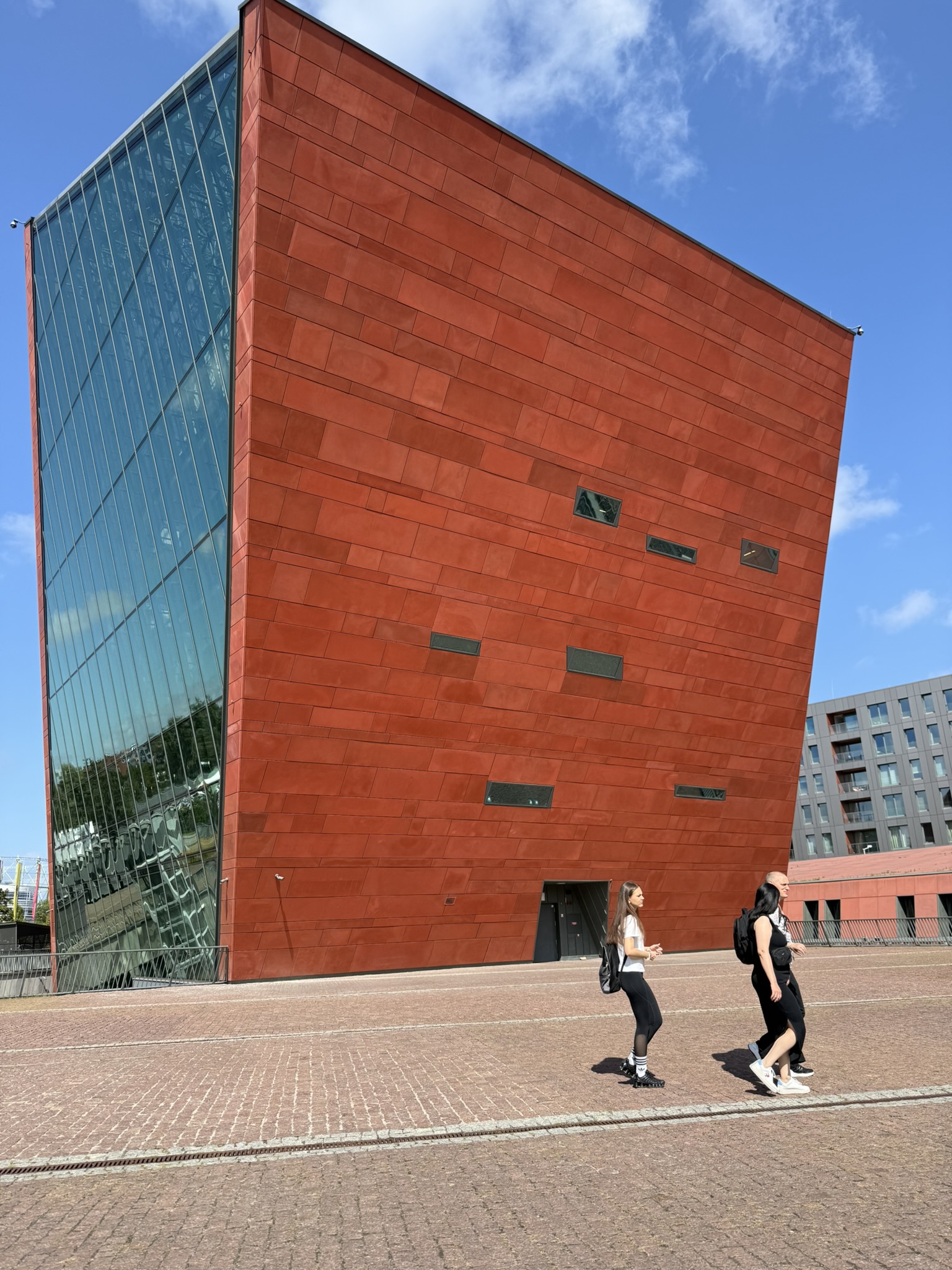
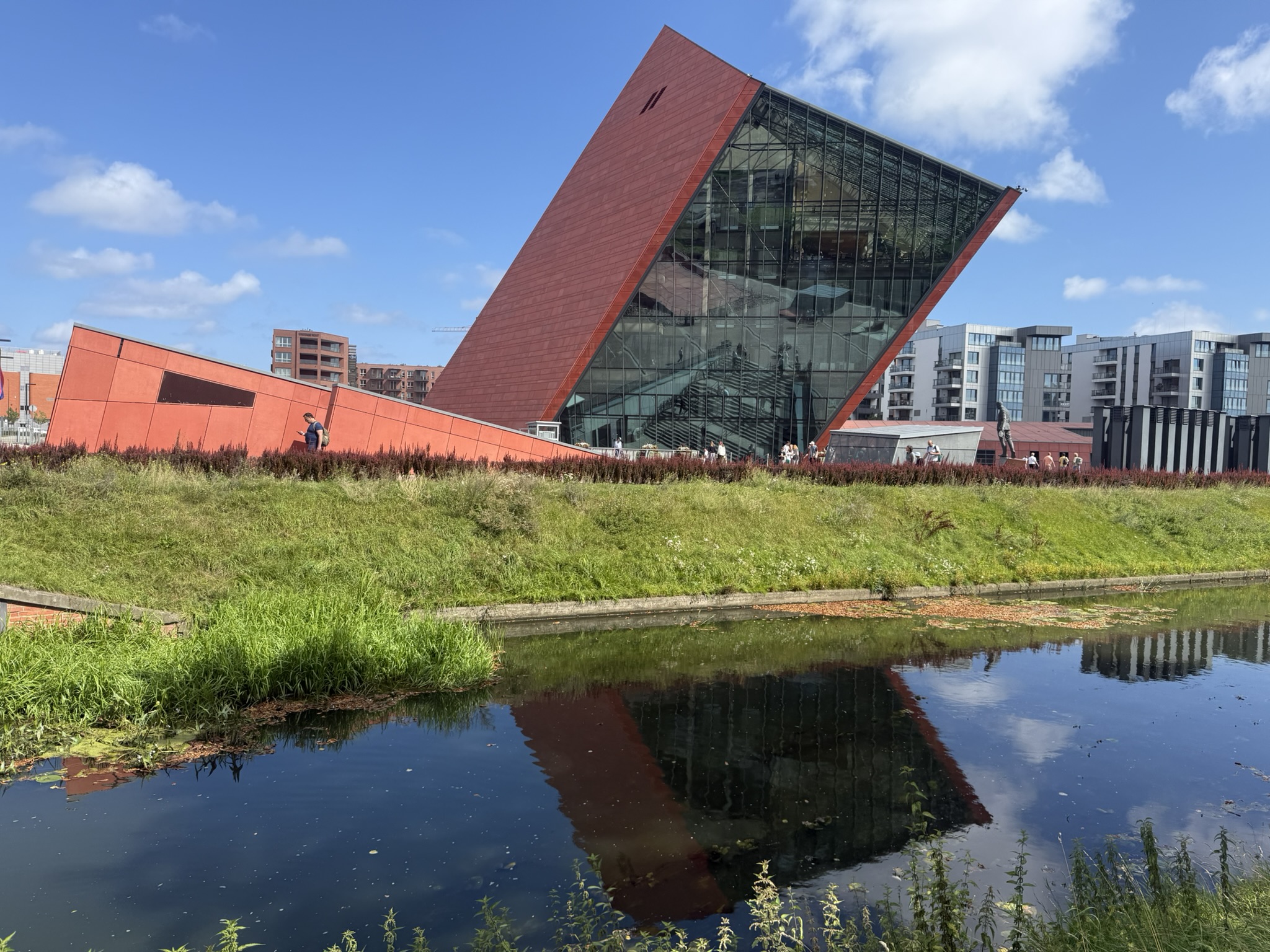
Where Gdansk has succeeded to make an impact is with two of its museums. Firstly, there is the very striking Museum of the Second World War which opened in 2017
The other museum of note is the European Solidarity Centre named after the Polish trade union which helped to lead political resistance to the ruling Communist Party during the 1970s-1980s.
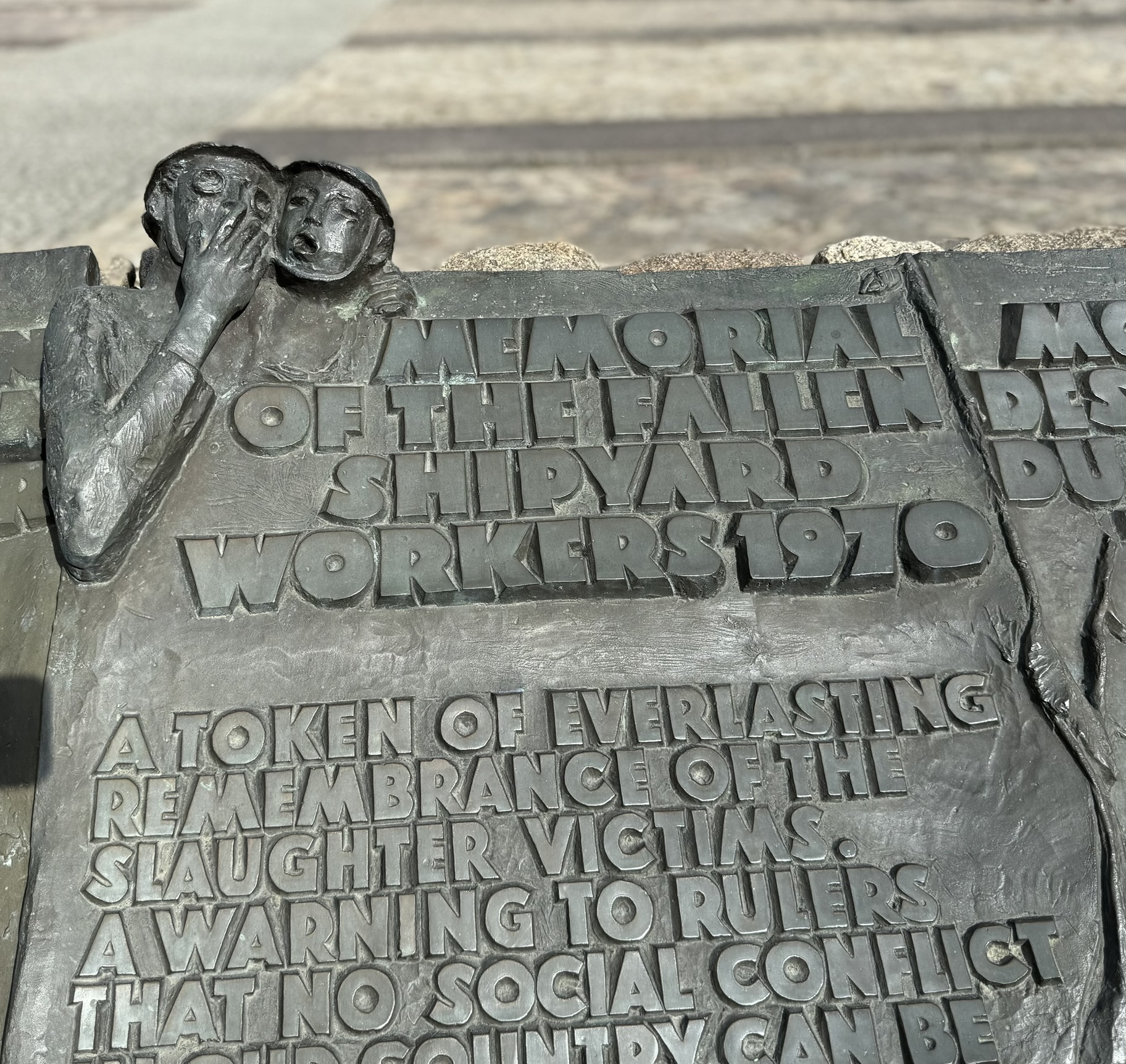
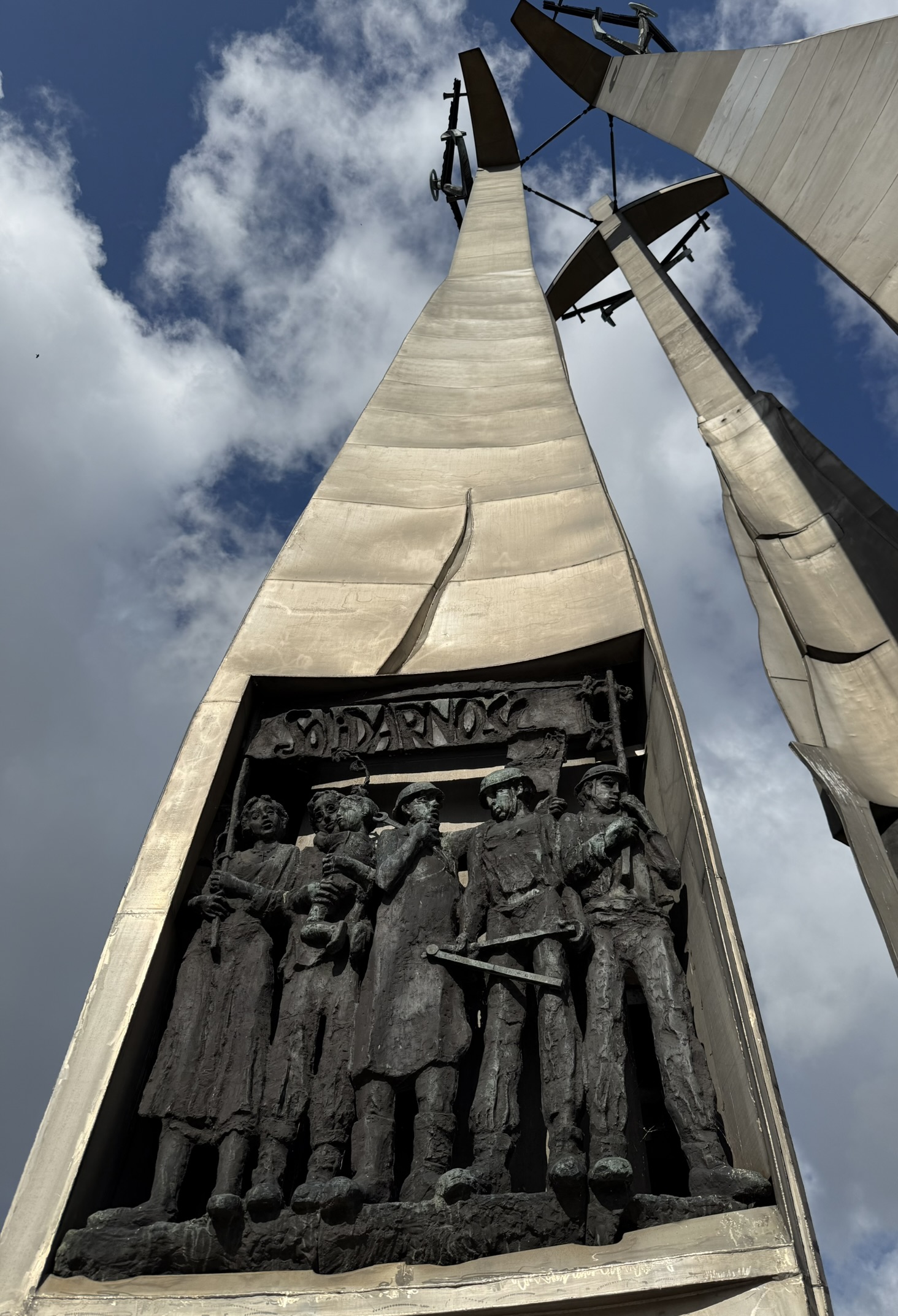
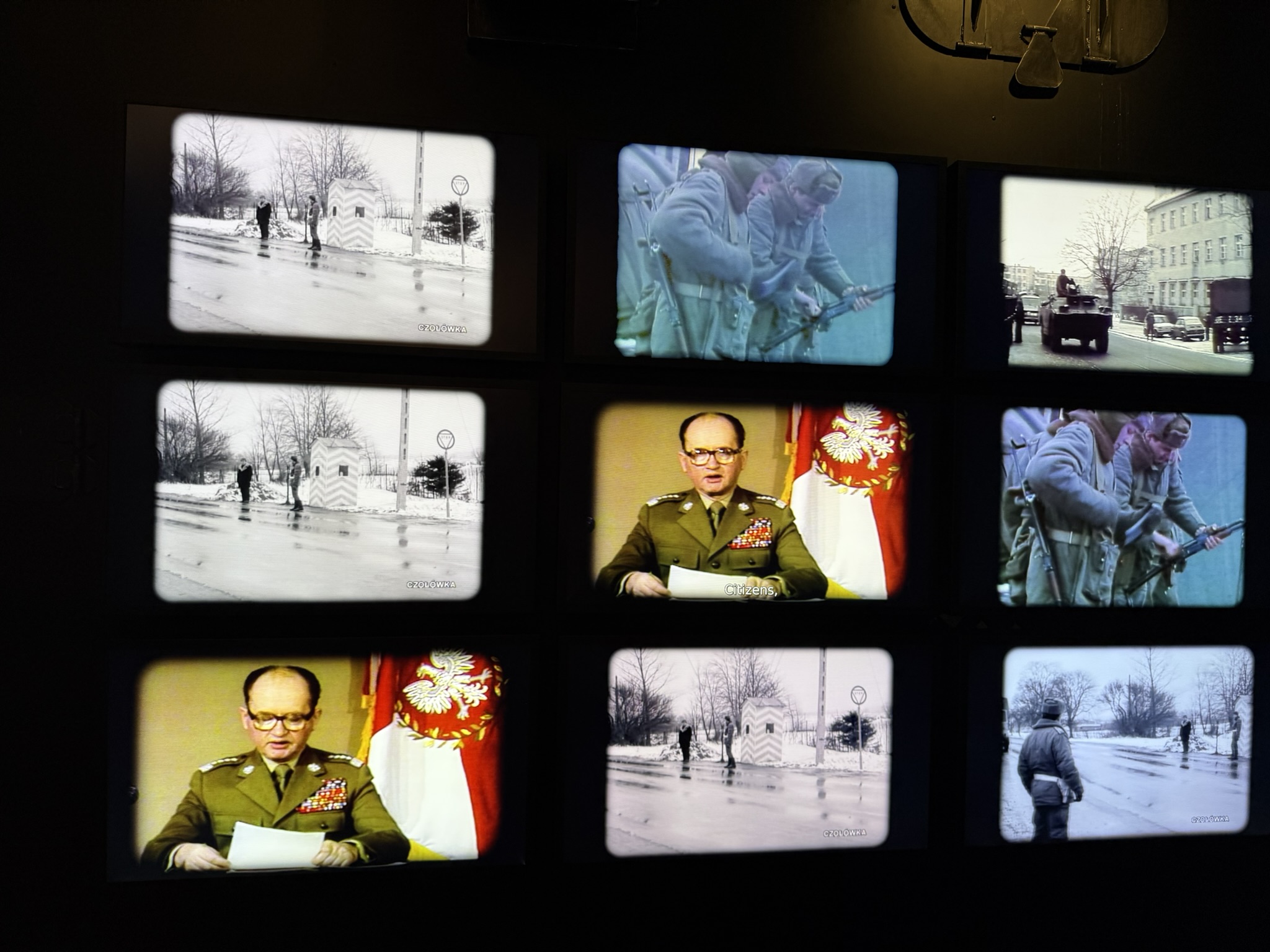
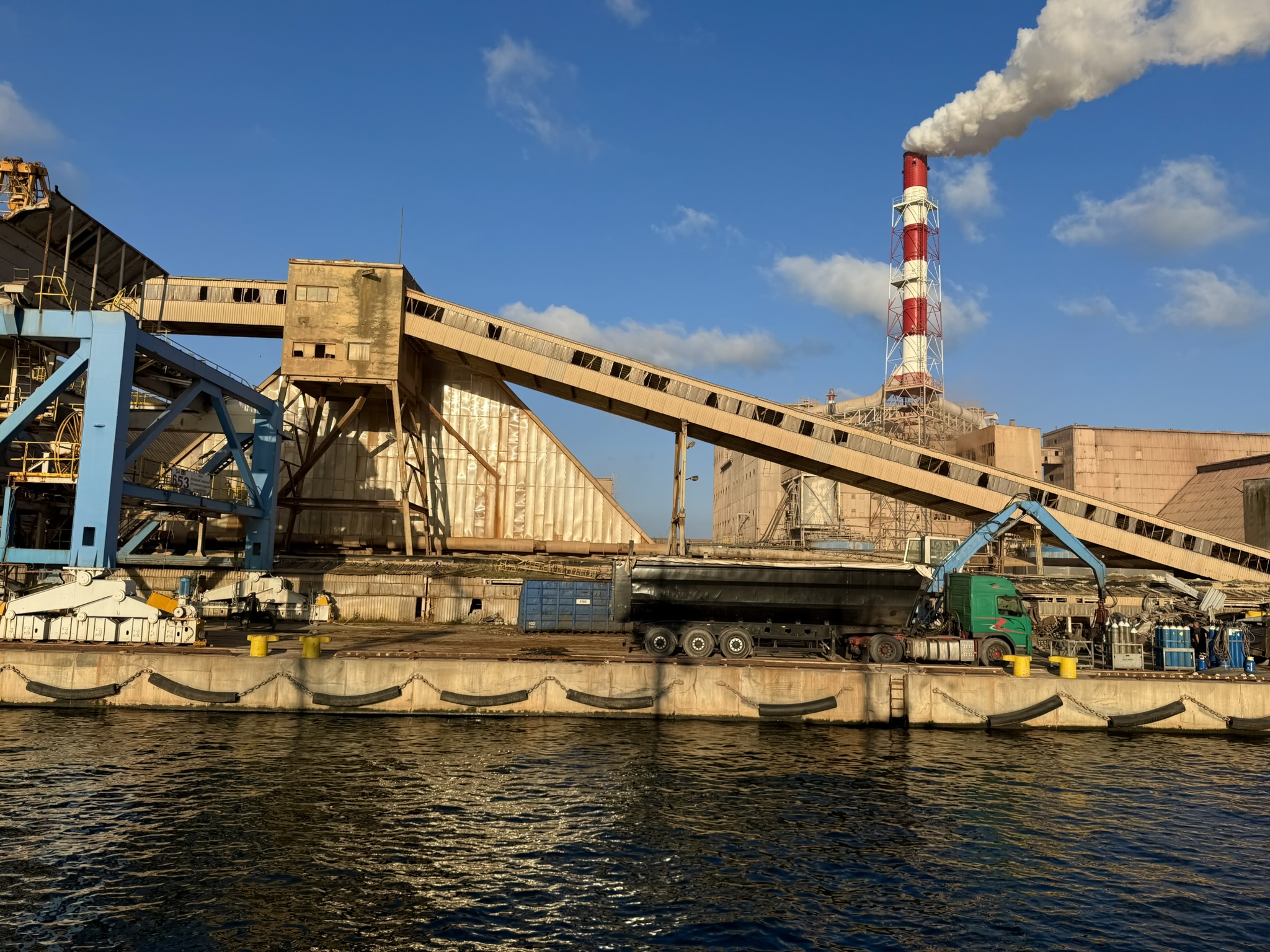
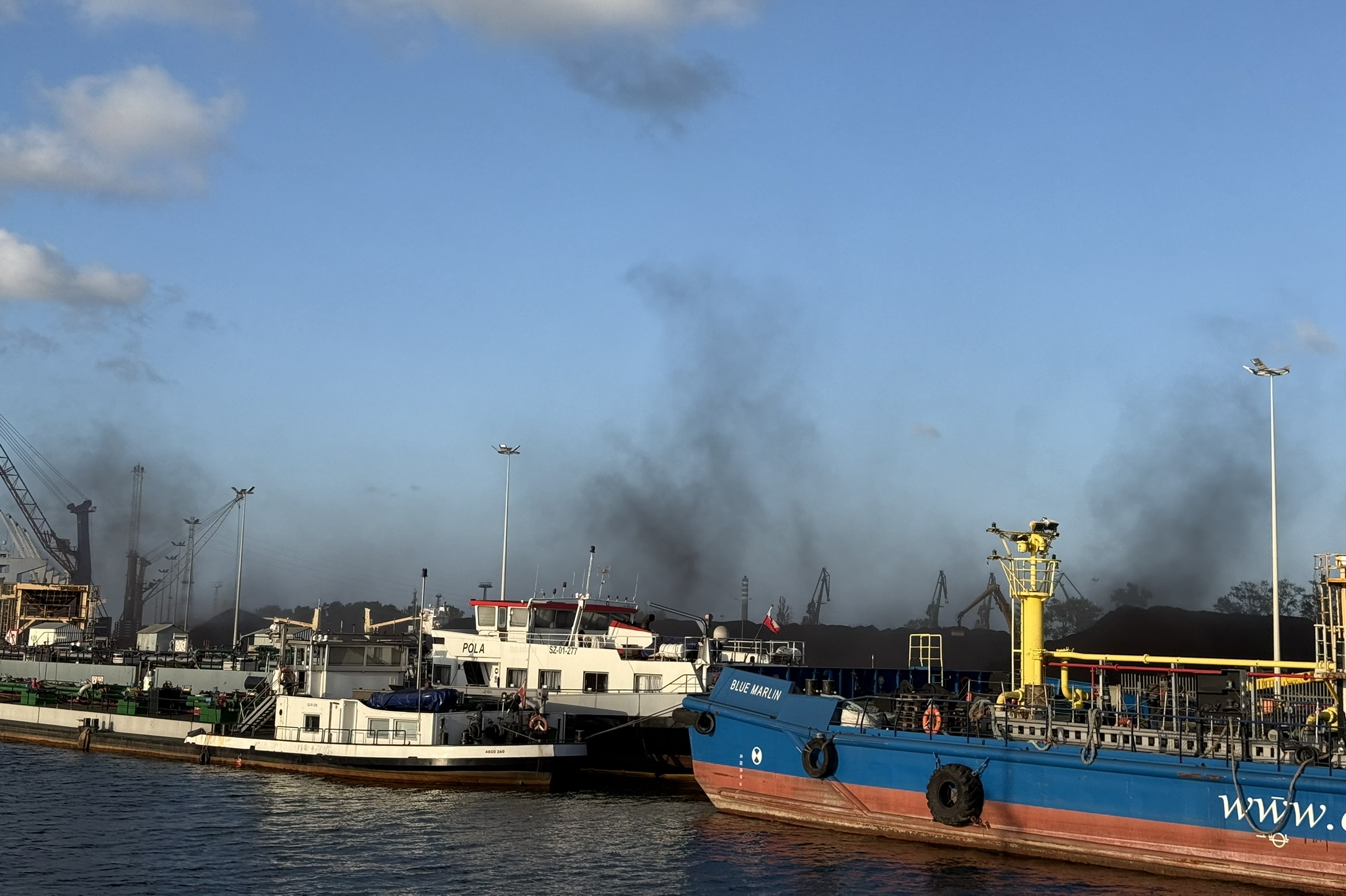
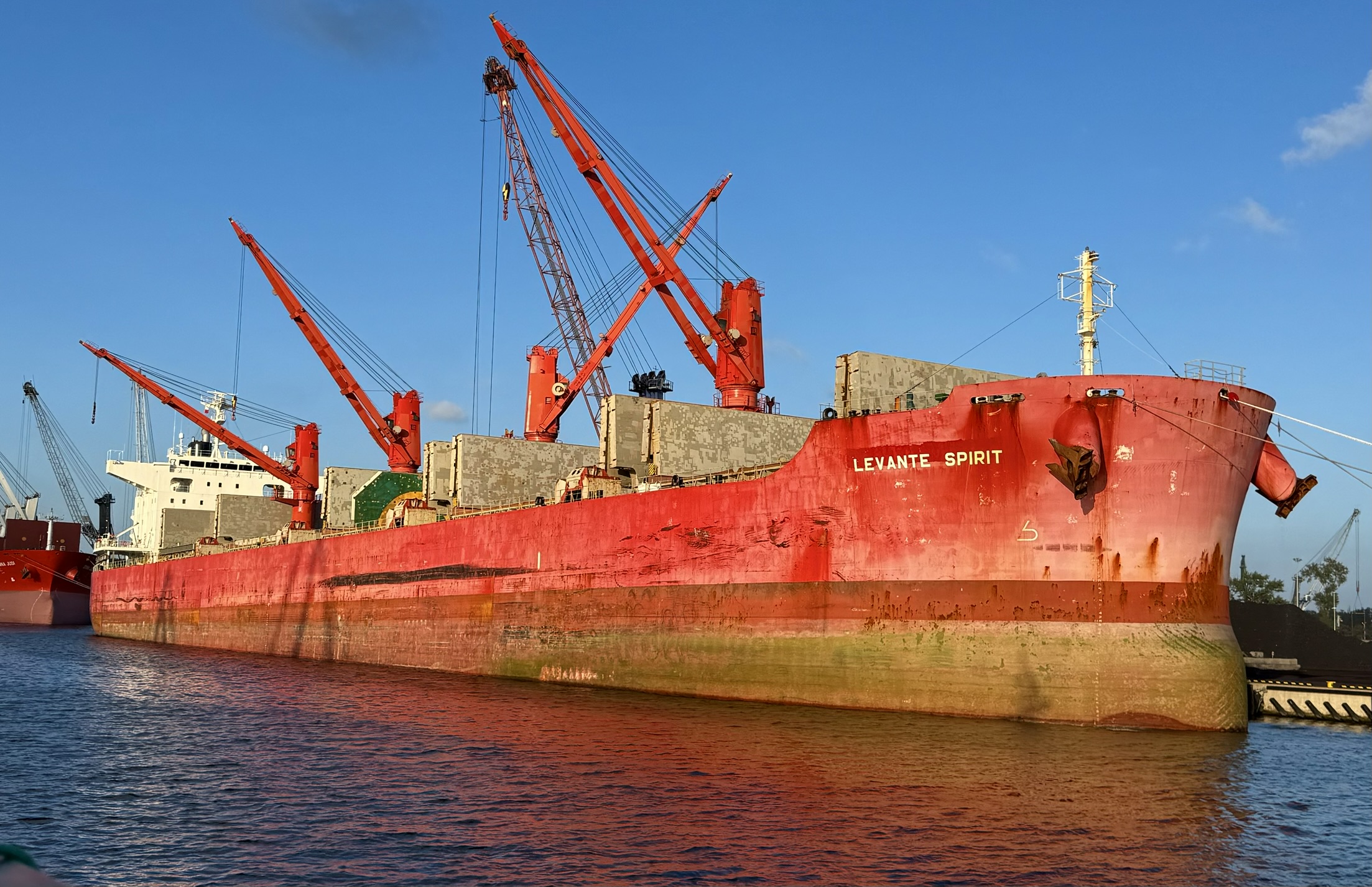
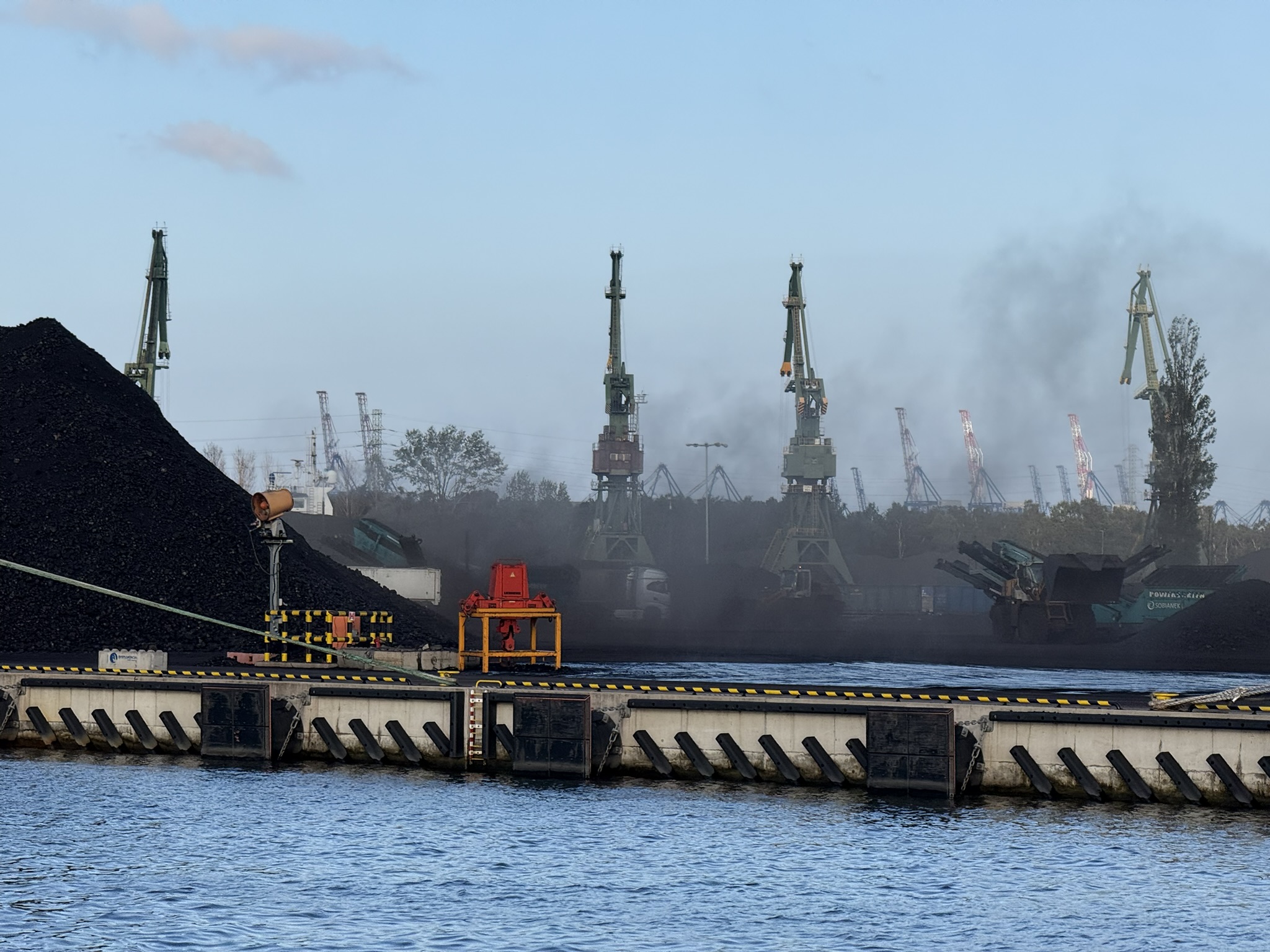
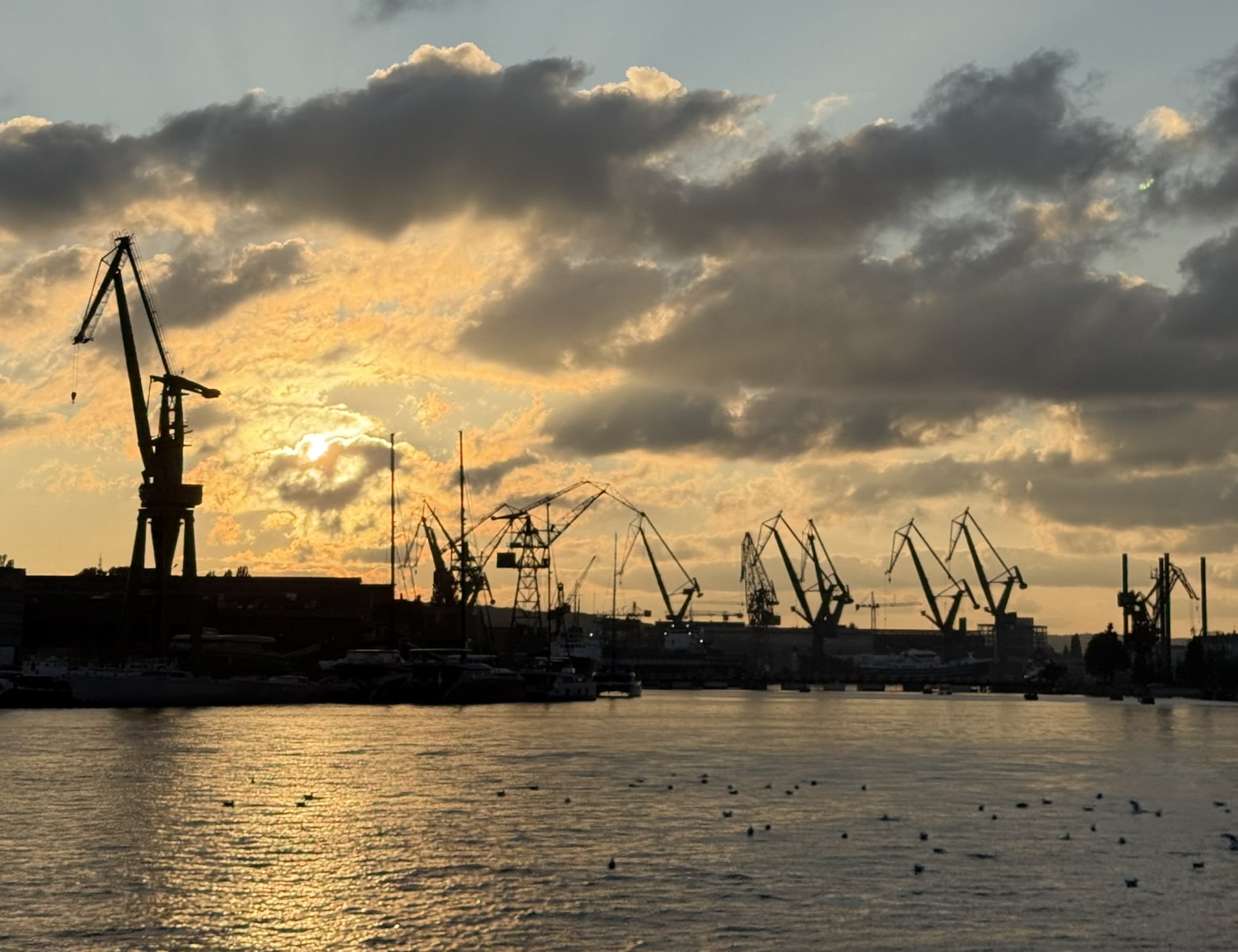
Solidarity’s stronghold was based in the city’s shipyards, and the port is still one of the largest in the Baltic Sea. It’s possible to get a good idea of its scale and range of activity by taking one of the cruises navigating part of the extensive Vistula river estuary
Torun
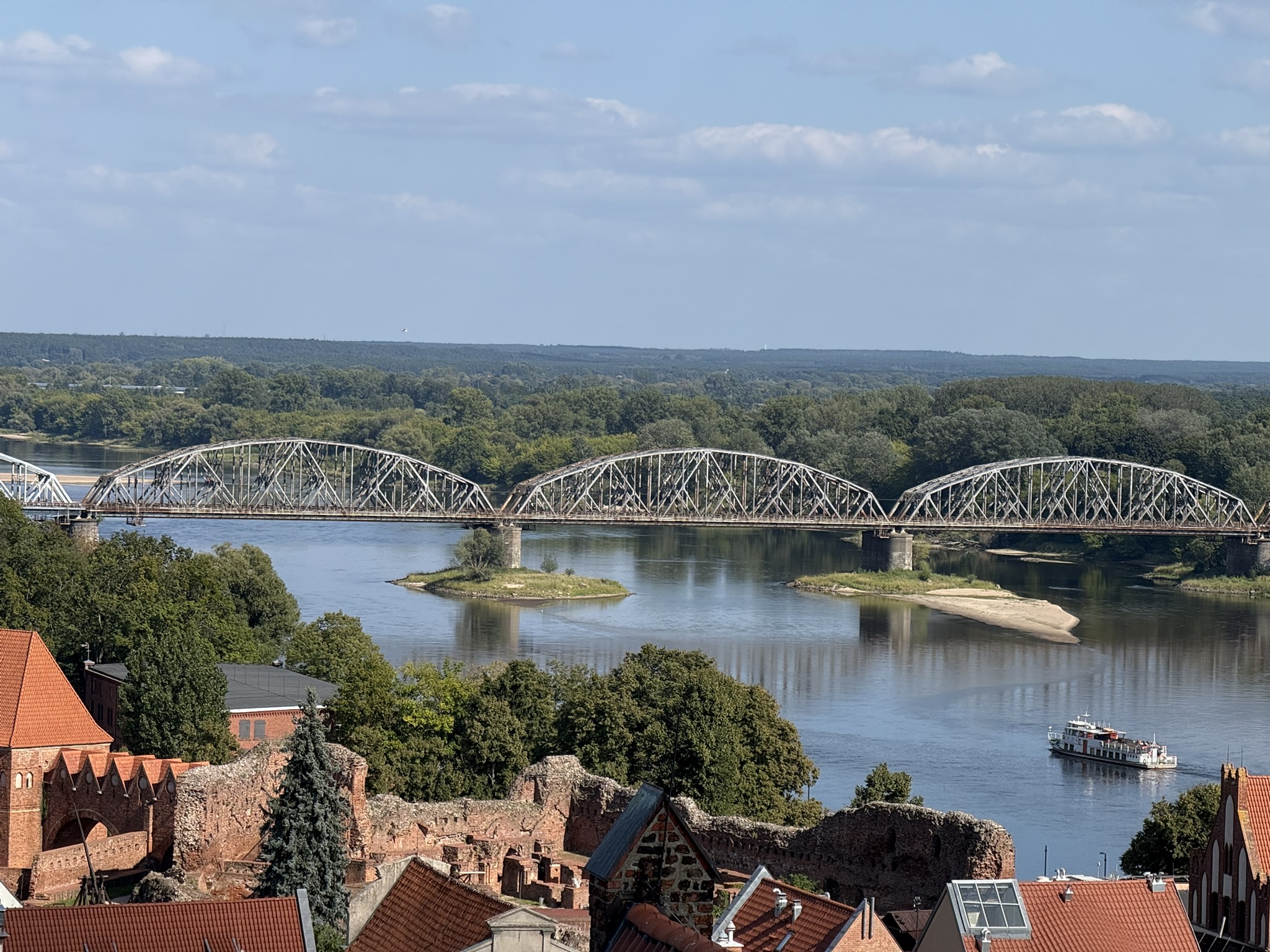
Heading south by train our next stop was Torun, a well preserved mediaeval city which managed to escape significant wartime destruction. It lies besides Poland’s longest river, the Vistula, which flows into the Baltic via Gdansk.
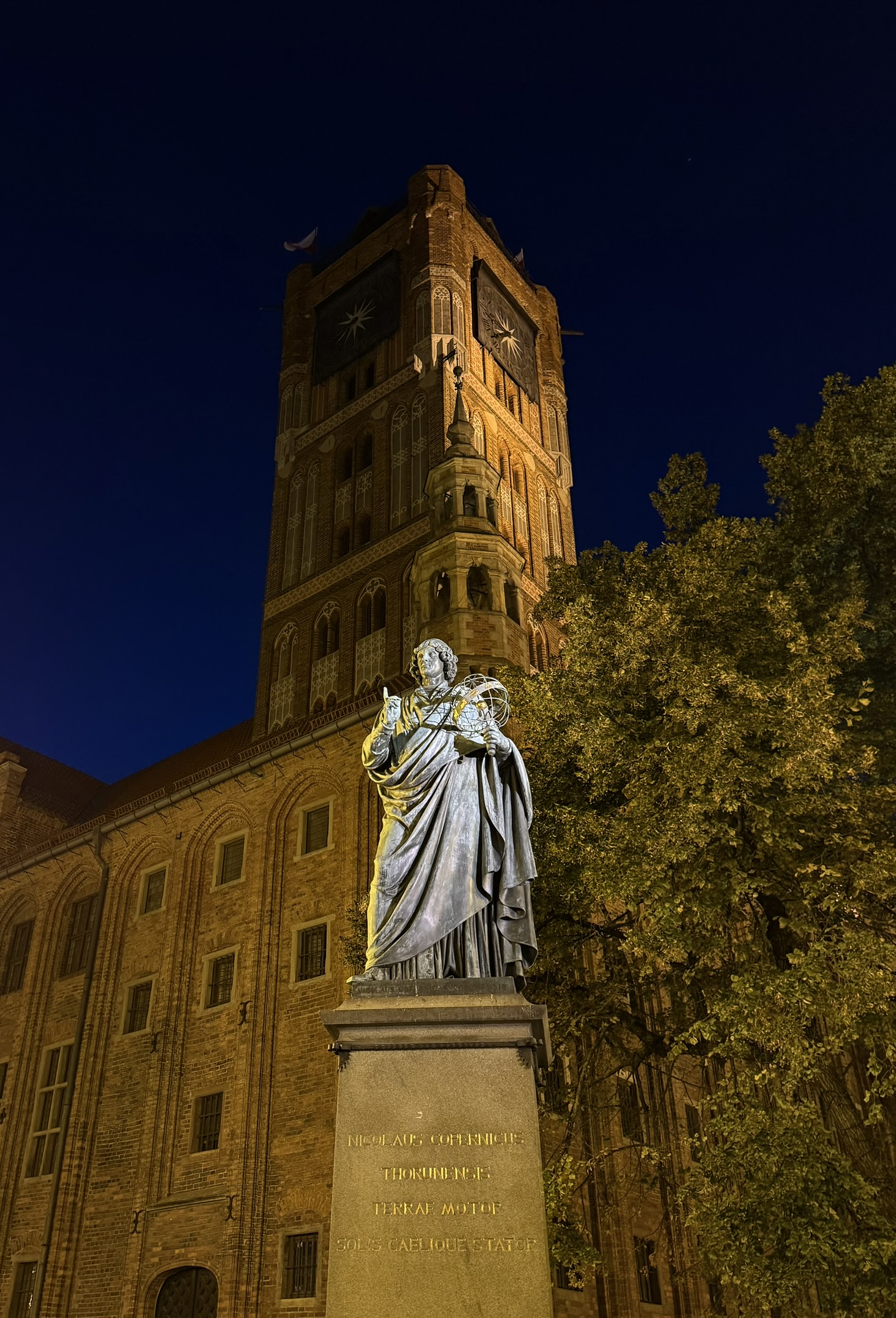
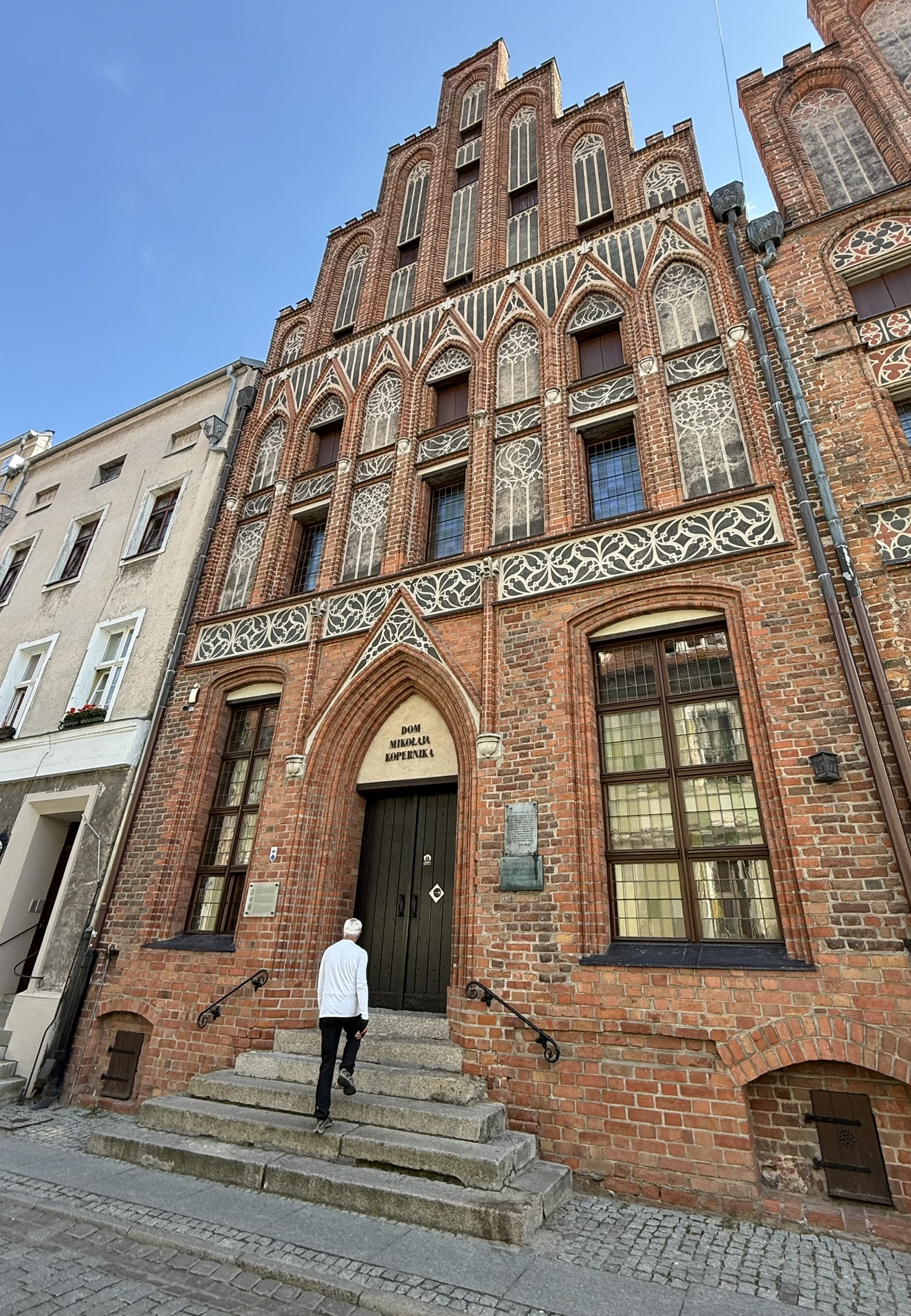
Probably Torun’s best known former citizen is Nicolaus Copernicus, who famously revolutionised science by showing that the earth and other planets revolved around the sun. His childhood home is now a museum dedicated to his life and work, and he is honoured by a statue unveiled in 1853 next to the town hall
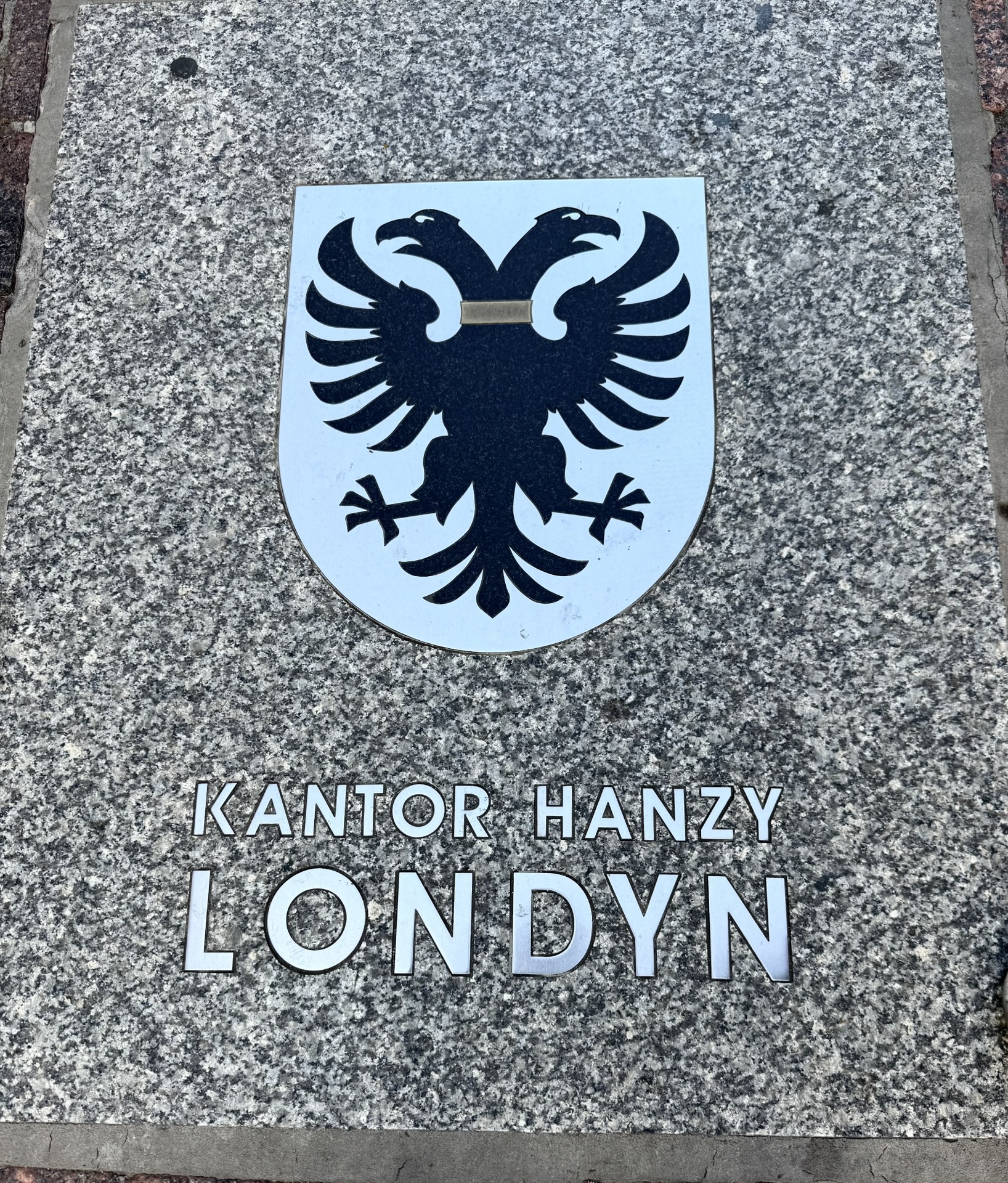
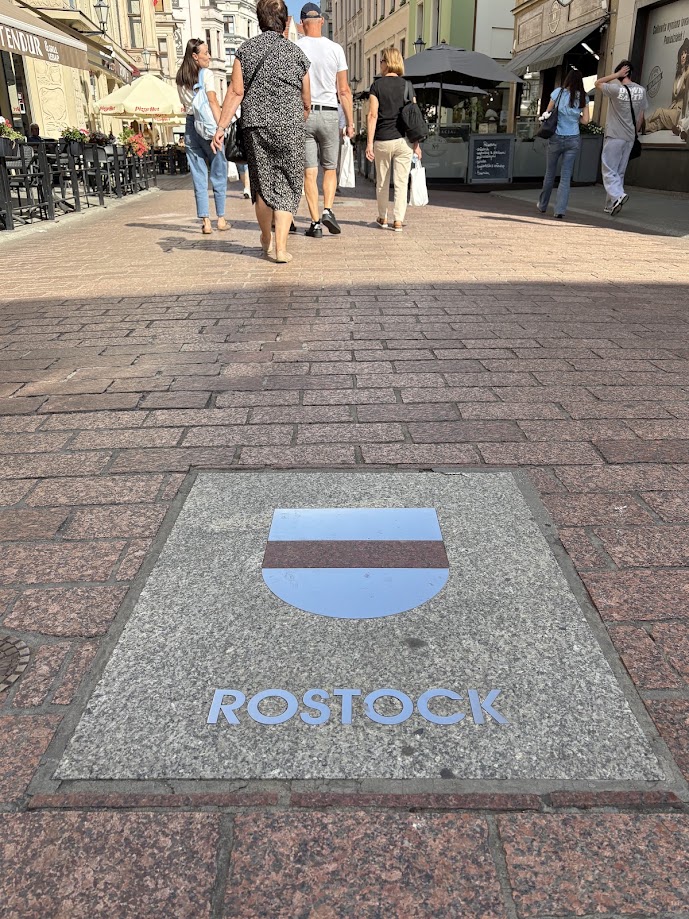
The main street in Torun celebrates the Hanseatic League history through a series of slabs containing the coats of arms of the main trading cities such as London and Lubeck
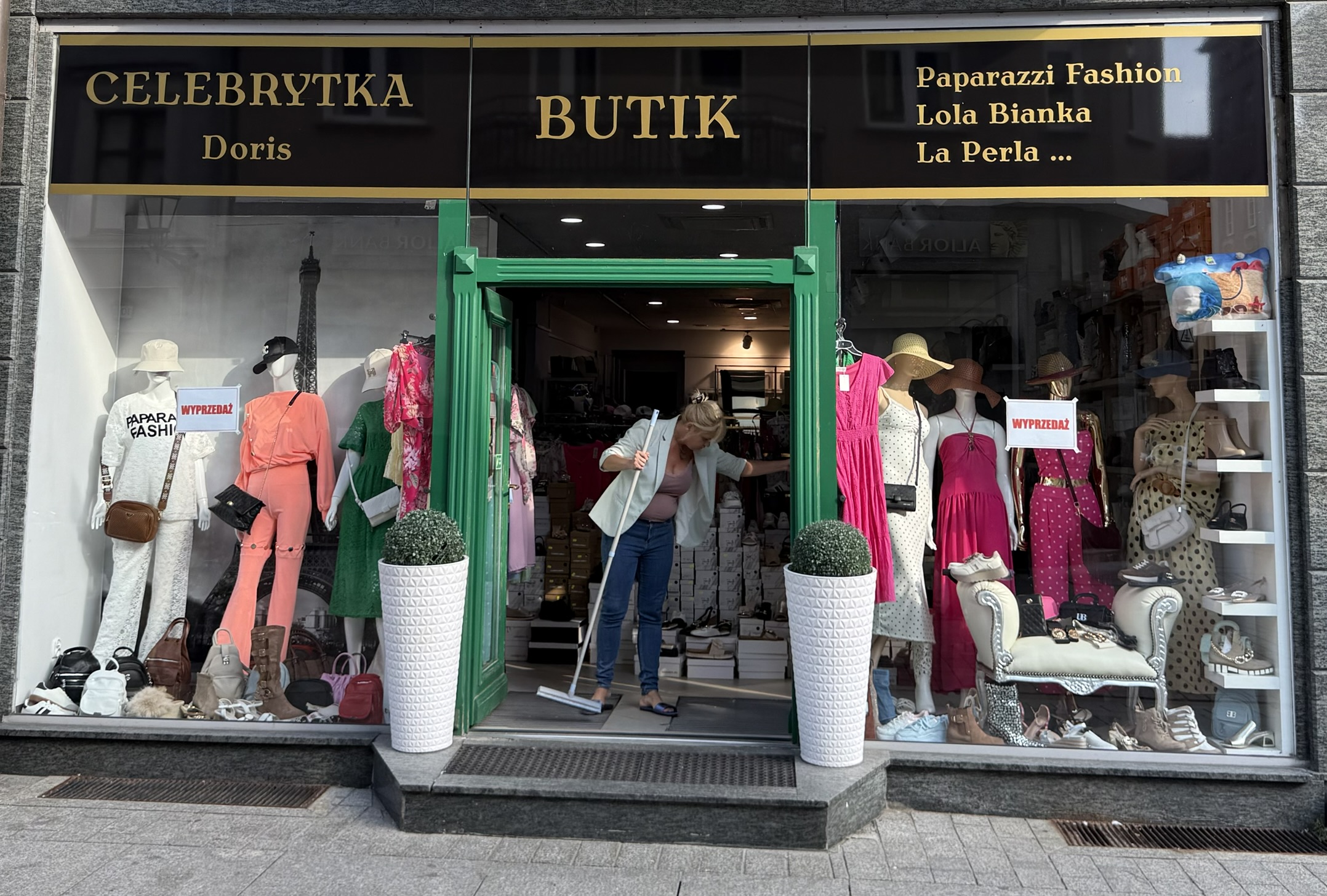
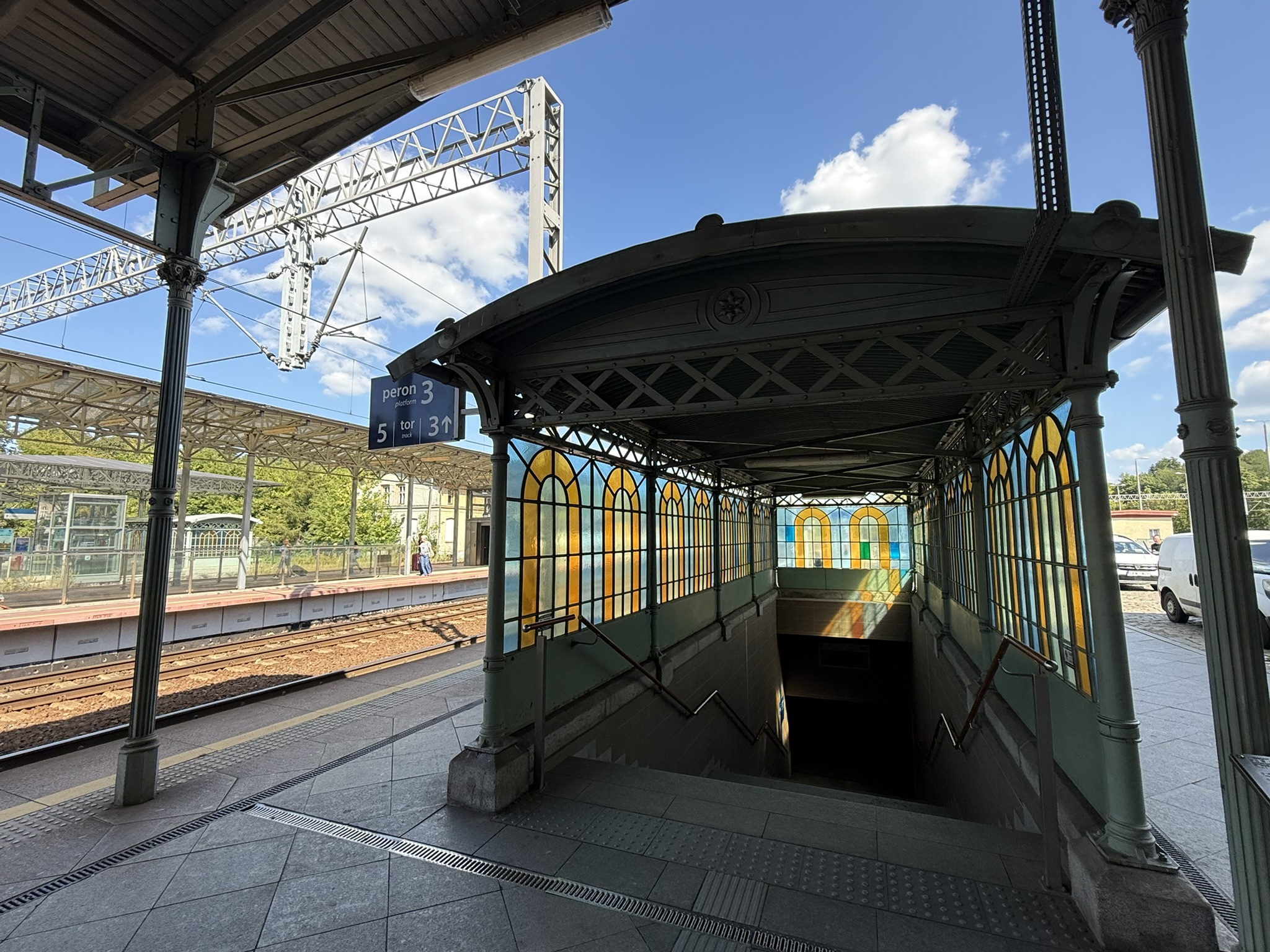
Torun still shows an interesting mixture of old and not so new, as seen in its clothes shops and railway station
Szczecin
Rivalling Gdansk as a major Baltic seaport, and like Gdansk, formerly a German city known as Stettin, it was returned to Polish control in 1945 and sits beside the Oder River on the border with Germany. Churchill referenced it in his famous ‘Iron Curtain’ speech of 1946, which is often seen as marking the beginning of the Cold War https://www.youtube.com/watch?v=5QuSXZTo3Uo
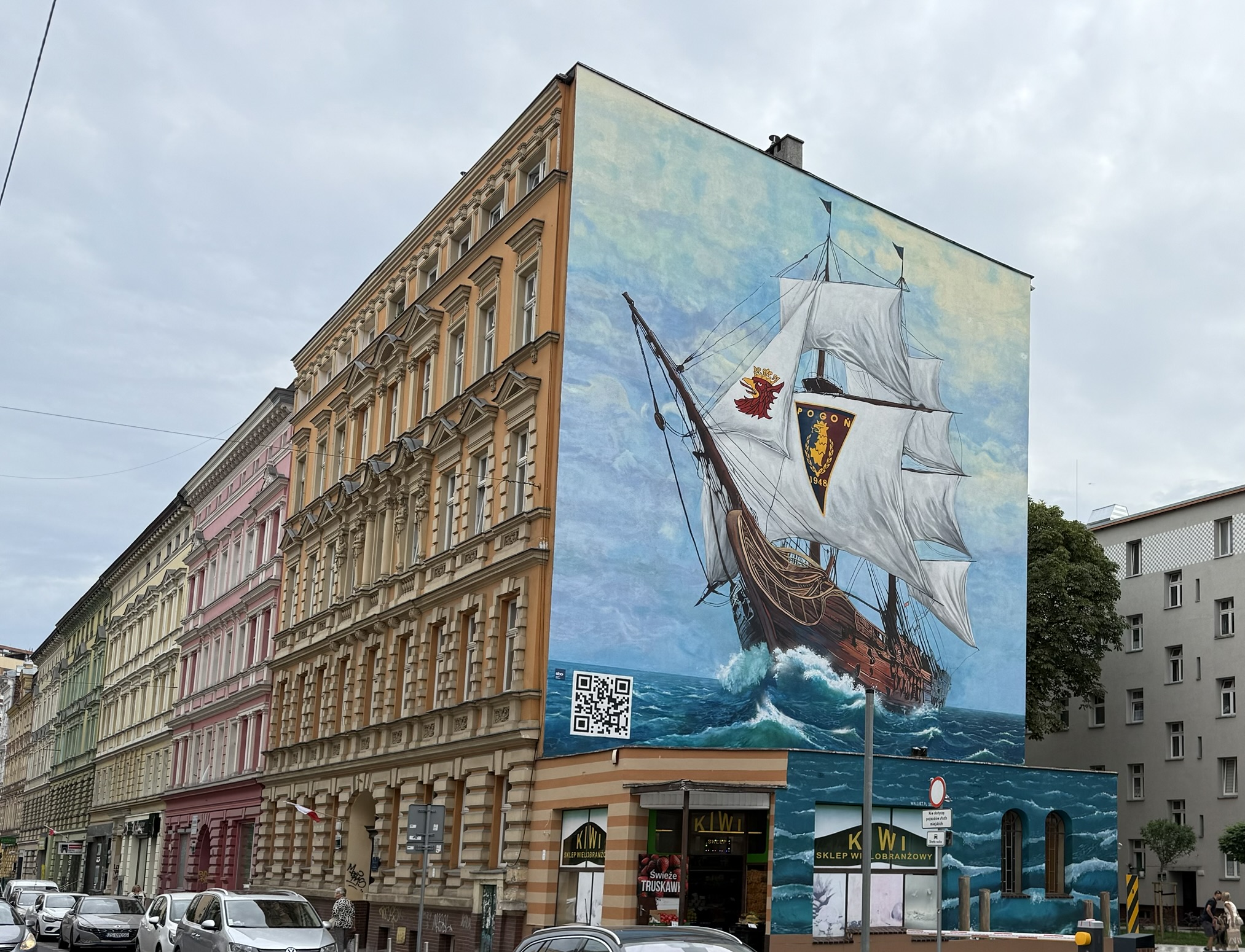
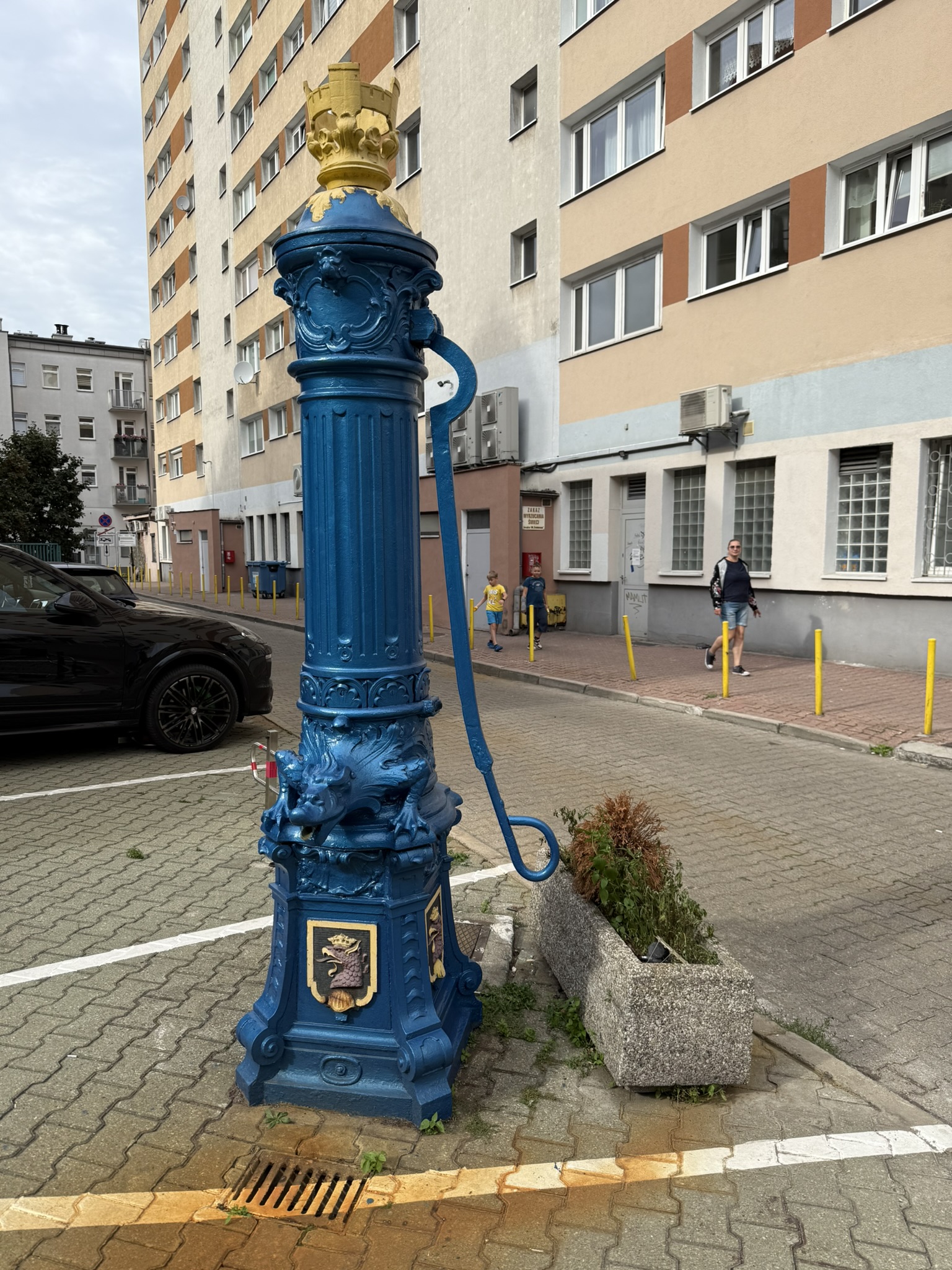
Szczecin’s Hanseatic history can be seen in this striking mural which adorns the side of a restored late 19th century block of buildings. Dating from the same period is another typical feature of the city – its water pumps, known locally as Berliners (as they resemble those from which originated in Berlin at the same time)
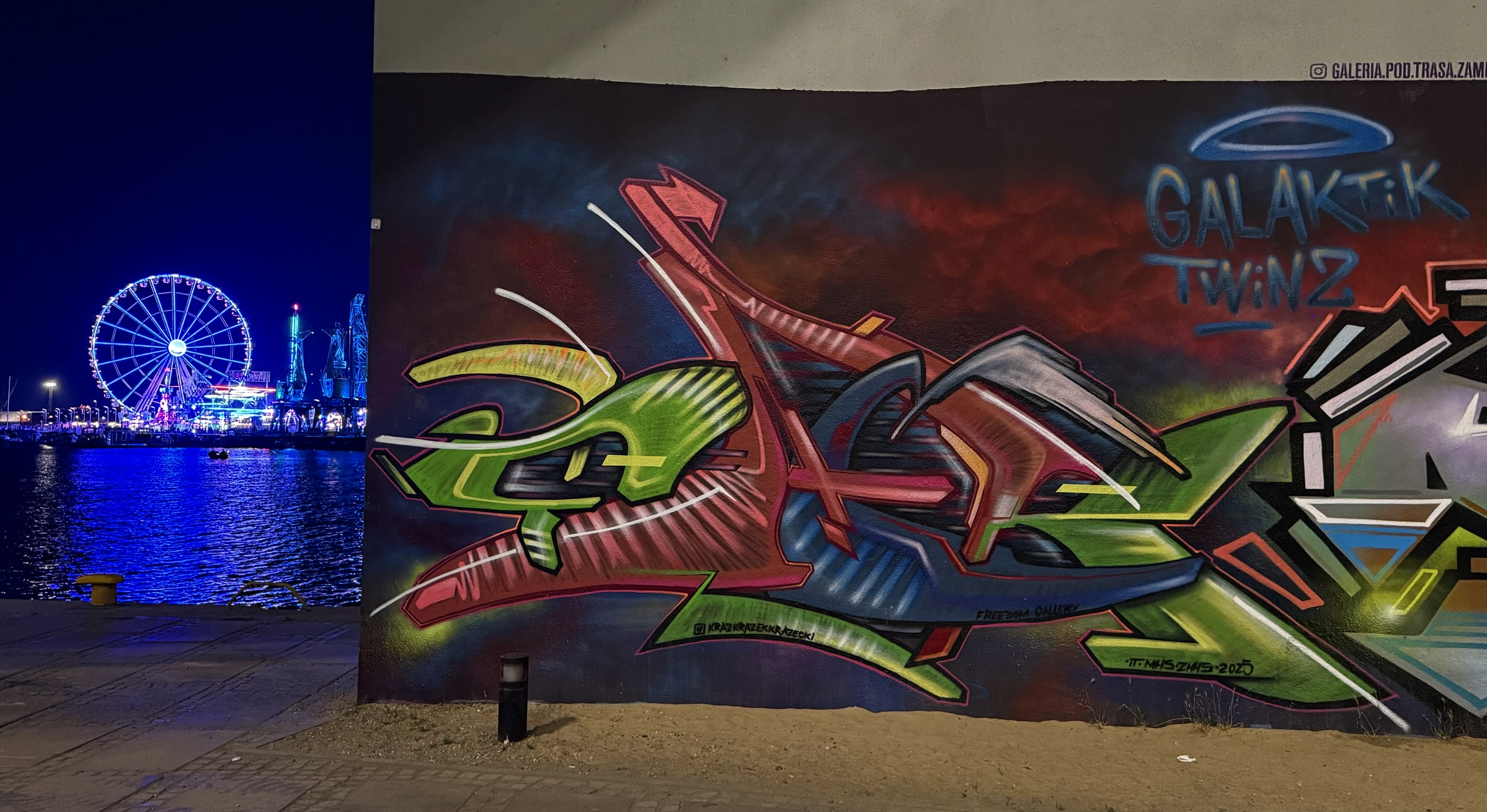
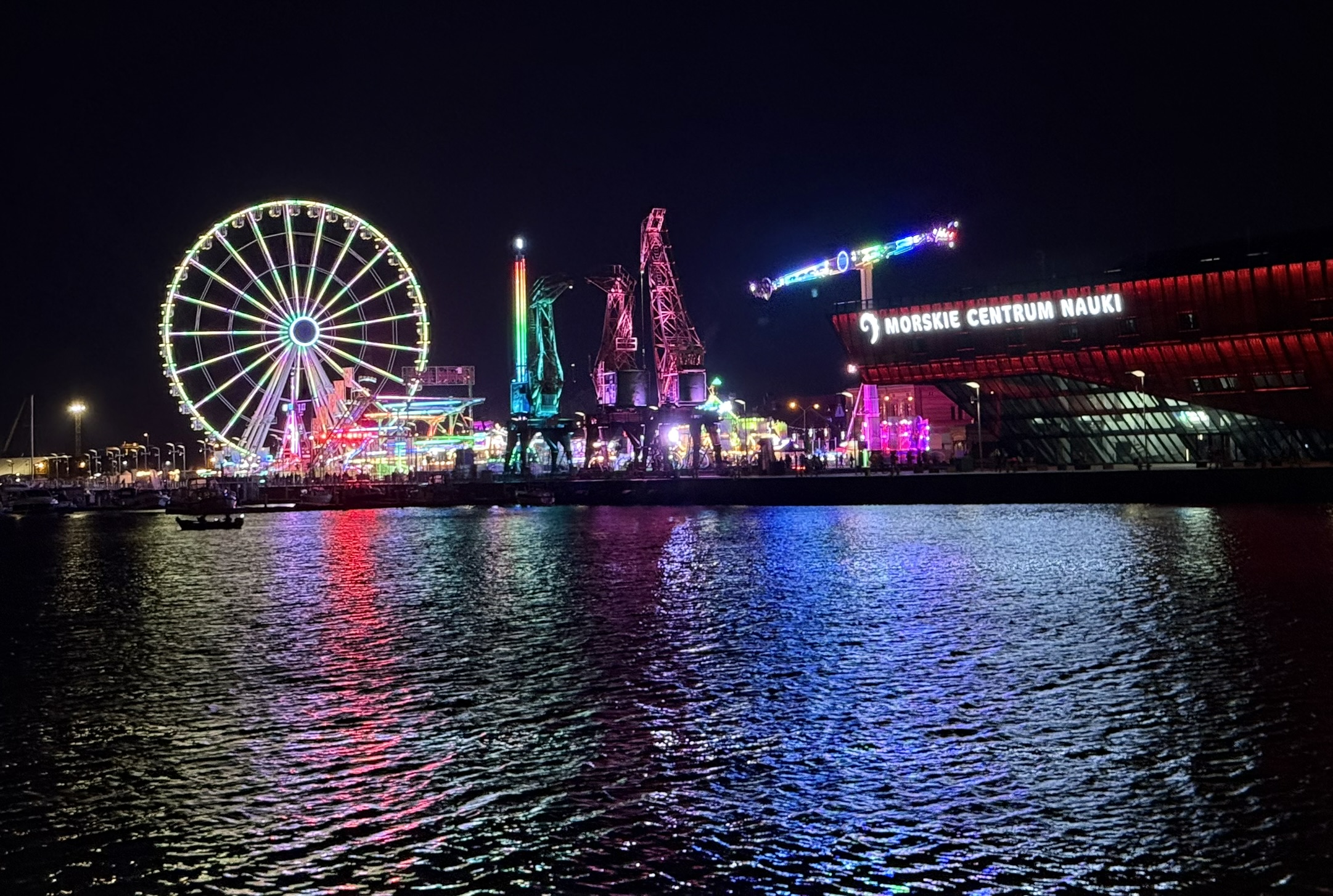
Adjacent to the city’s docks, Lasztownia, an abandoned river island between the West and East Oder, has been redeveloped into a lively centre of cultural activity and entertainment. Its most striking feature are three huge port cranes sited next to a big wheel
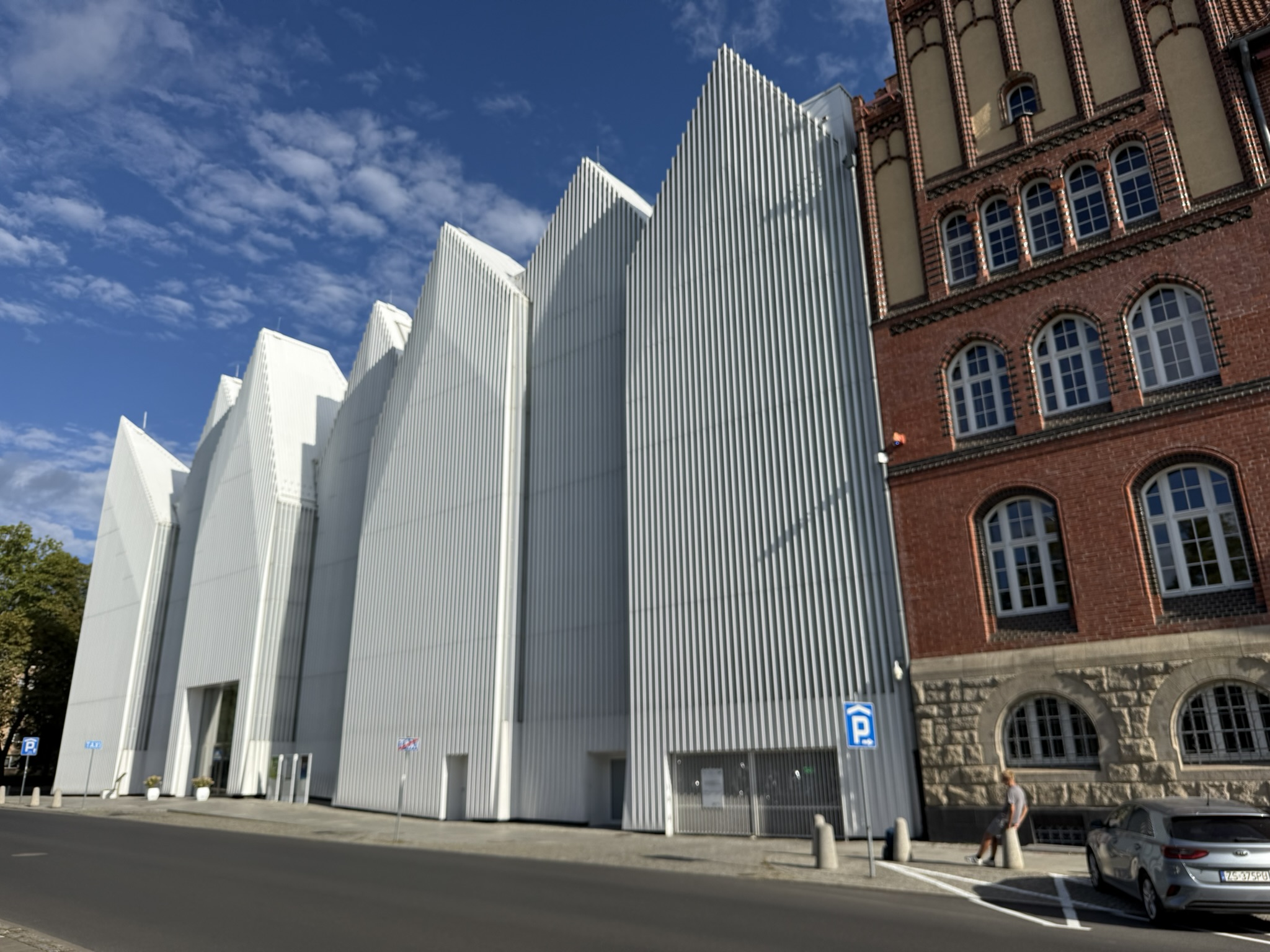
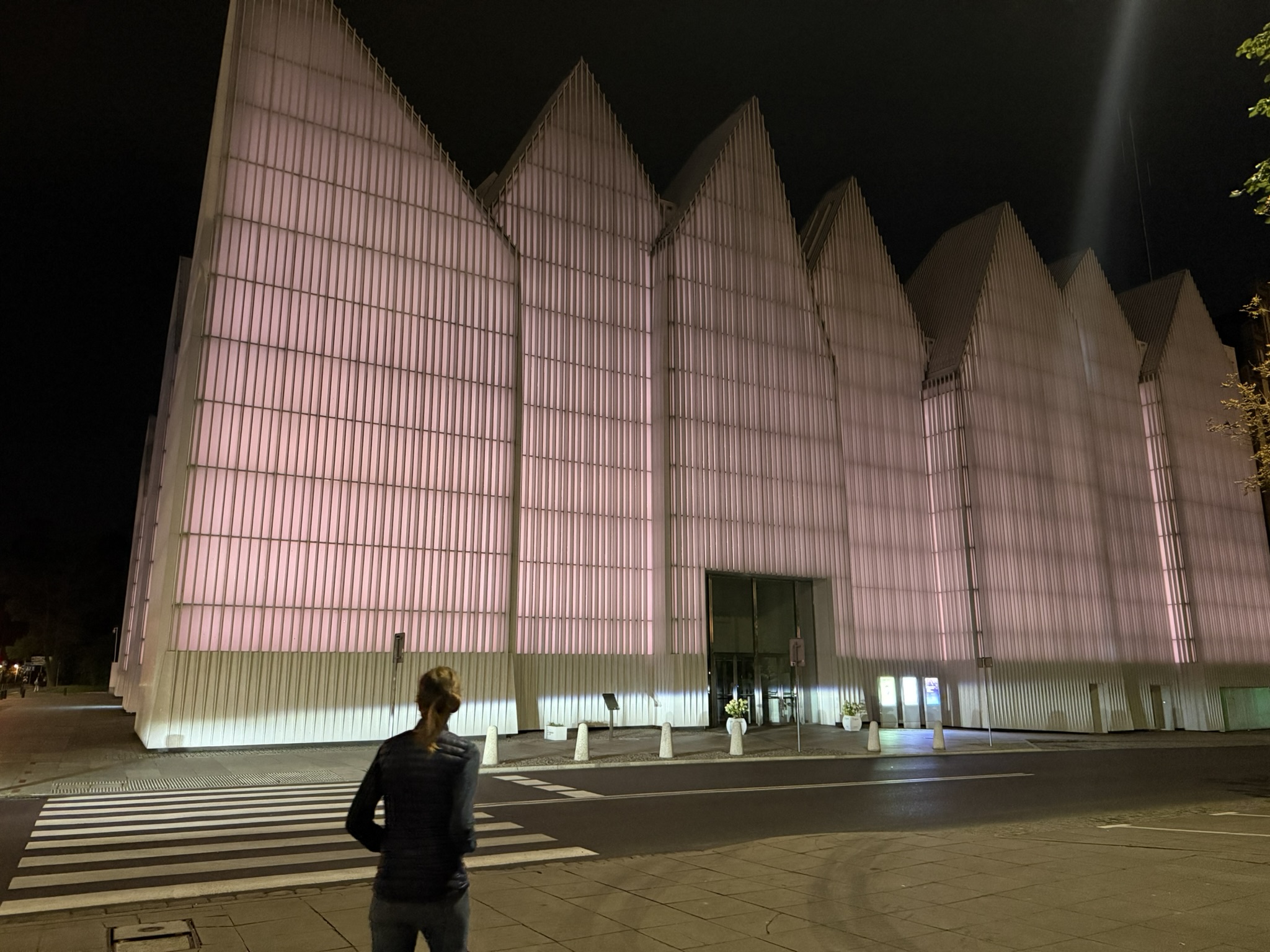
Probably Szezcin’s most notable modern building is the Philharmonic Hall which opened in 2014. It takes on an eerie glow at night.
Rostock
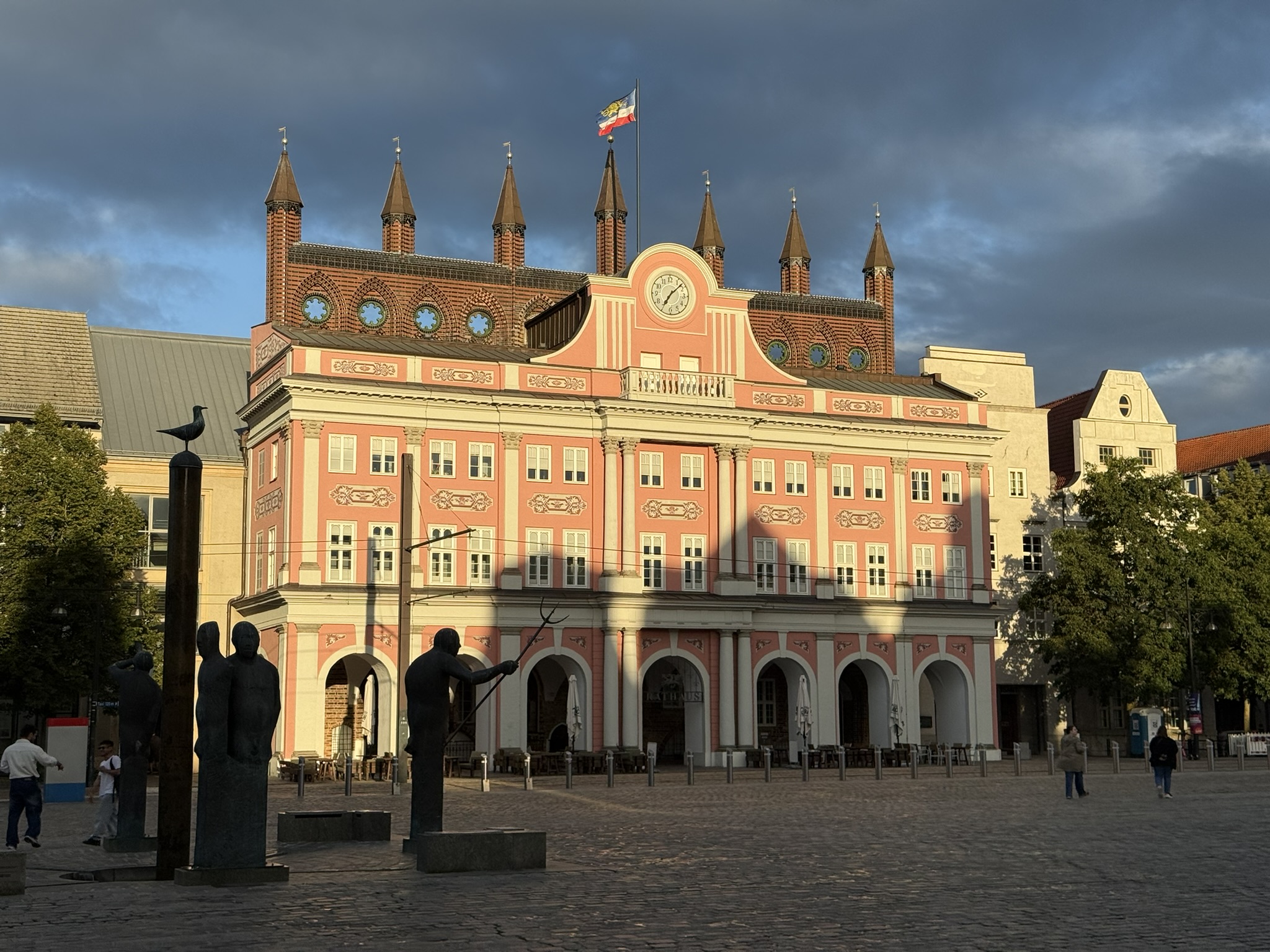
Another important member of the Hanseatic League, Rostock is still Germany’s biggest Baltic seaport. Its 13th century Rathaus (town hall) is a good example of the Brick Gothic style from that Hanseatic period.
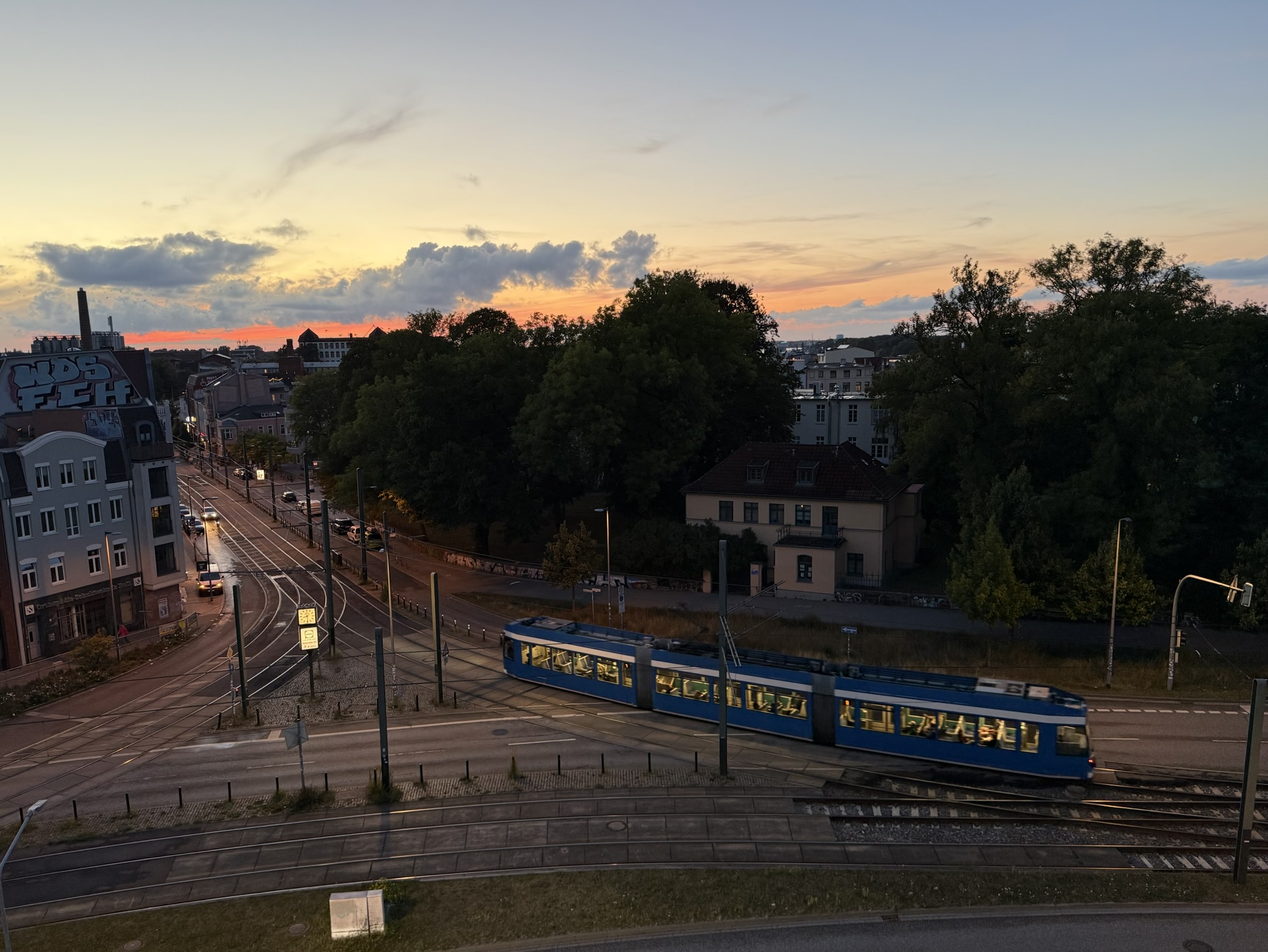
Like many German cities, Rostock has a superb tram network making it easy to navigate the city
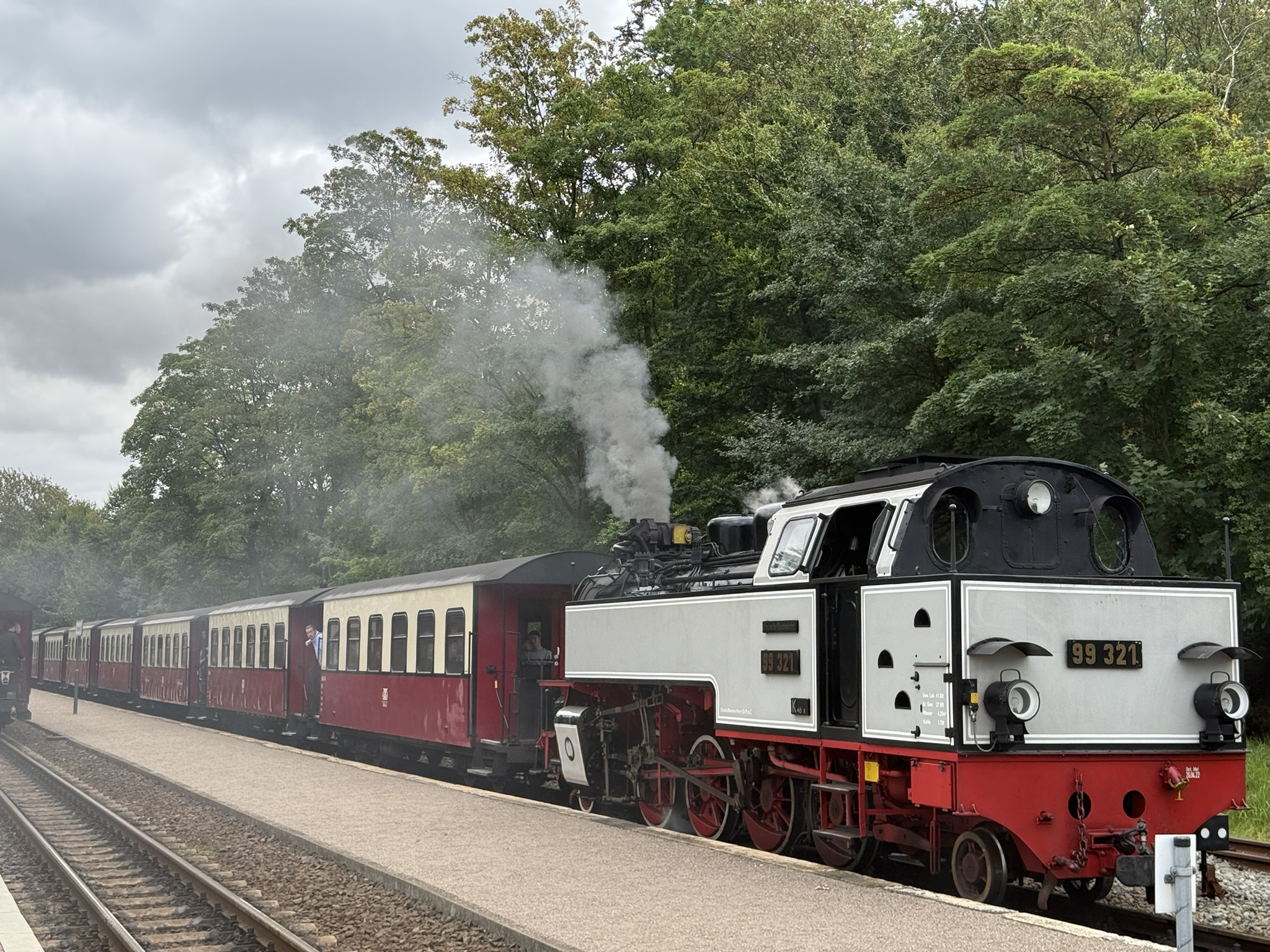
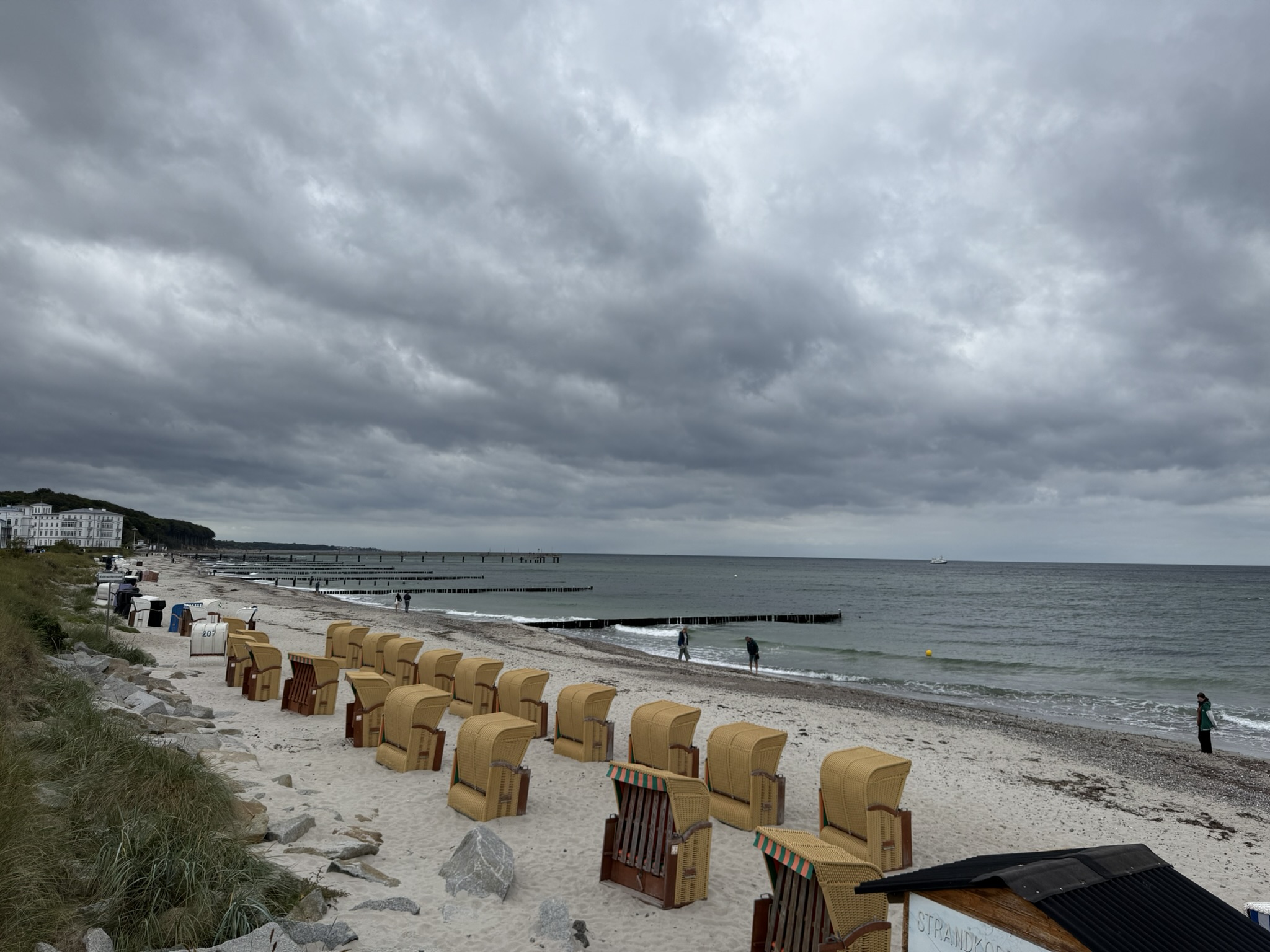
Just along the coast at Bad Doberan is the start of the Molli, a narrow guage steam hauled railway which runs ten miles along the coast. When built in 1886, it transported passengers to the seaside resort of Heiligendamm, whose spa is the oldest in Europe and whose guests included German emperors. Whilst the resort deteriorated under post-war Communist rule, it has undergone a 21st century renaissance and now boasts a five star luxury hotel. In 2007, it was the venue for the 33rd G8 Summit (which then included Russia). The summit provoked large scale violent demonstrations in Rostock.
Lubeck
In the late 13th Century, Lubeck became the main trading city of the Hanseatic League. Unsurprisingly, the city hosts the European Hansemuseum which provides a superb insight to the history of the League. Next to the museum is Burgkloster, or castle monastery, which also contains a museum of Lubeck. Under the Third Reich, it served as a Nazi prison, but now includes a history of Lubeck’s Jewish community.
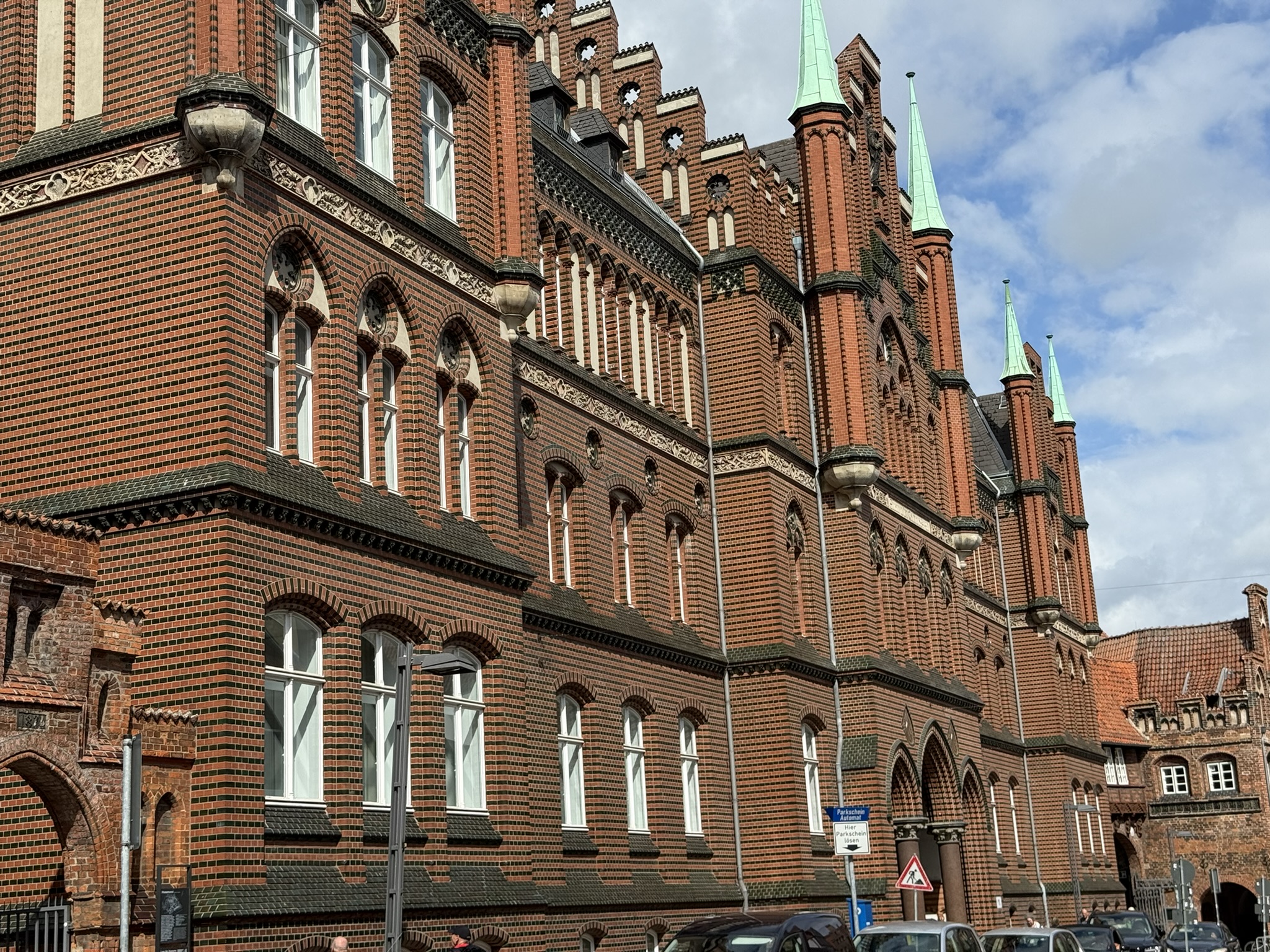
Dating from 1308, Lubeck Town Hall comprising three contrasting architectural styles, occupies the city’s main square.
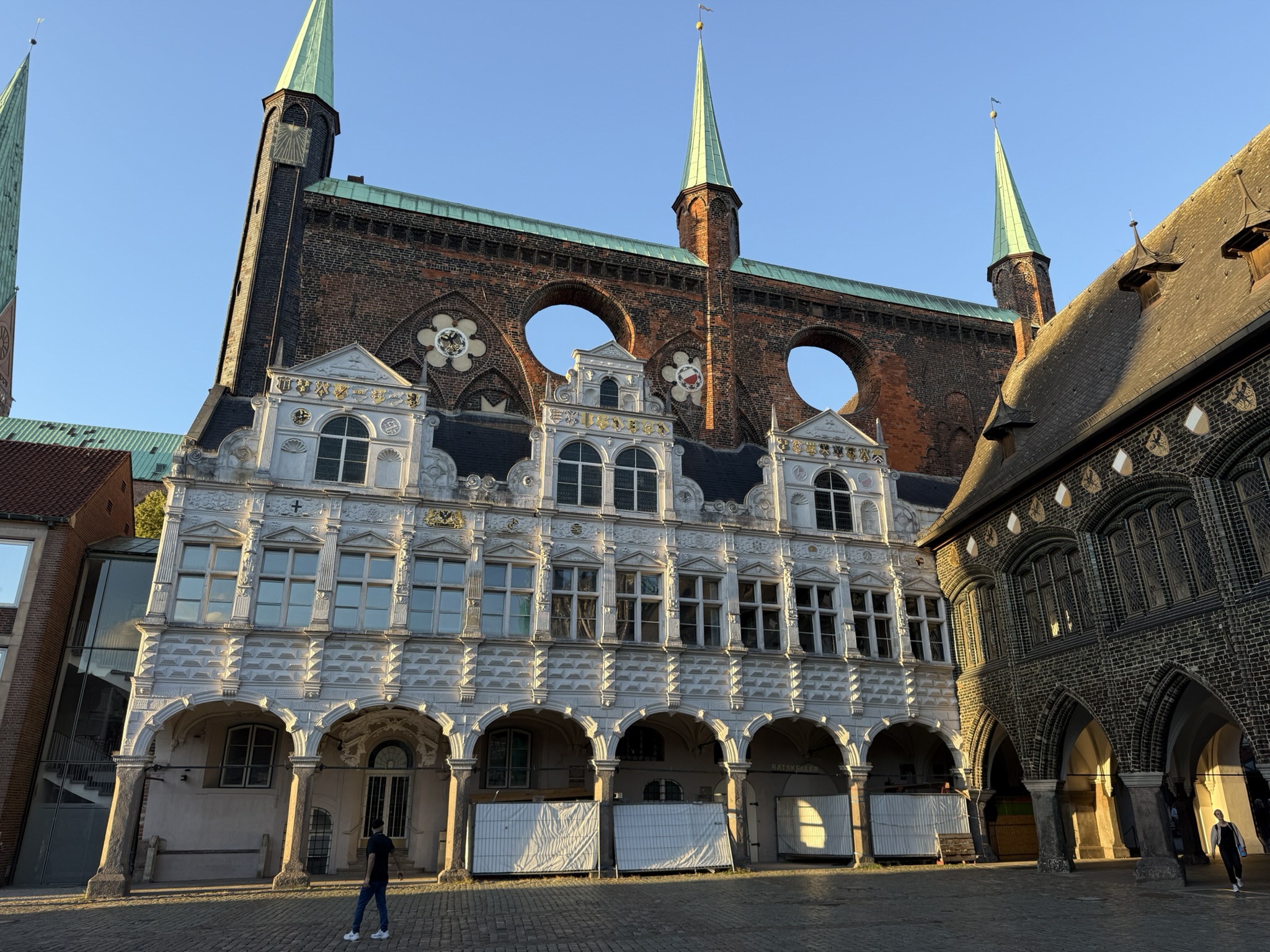
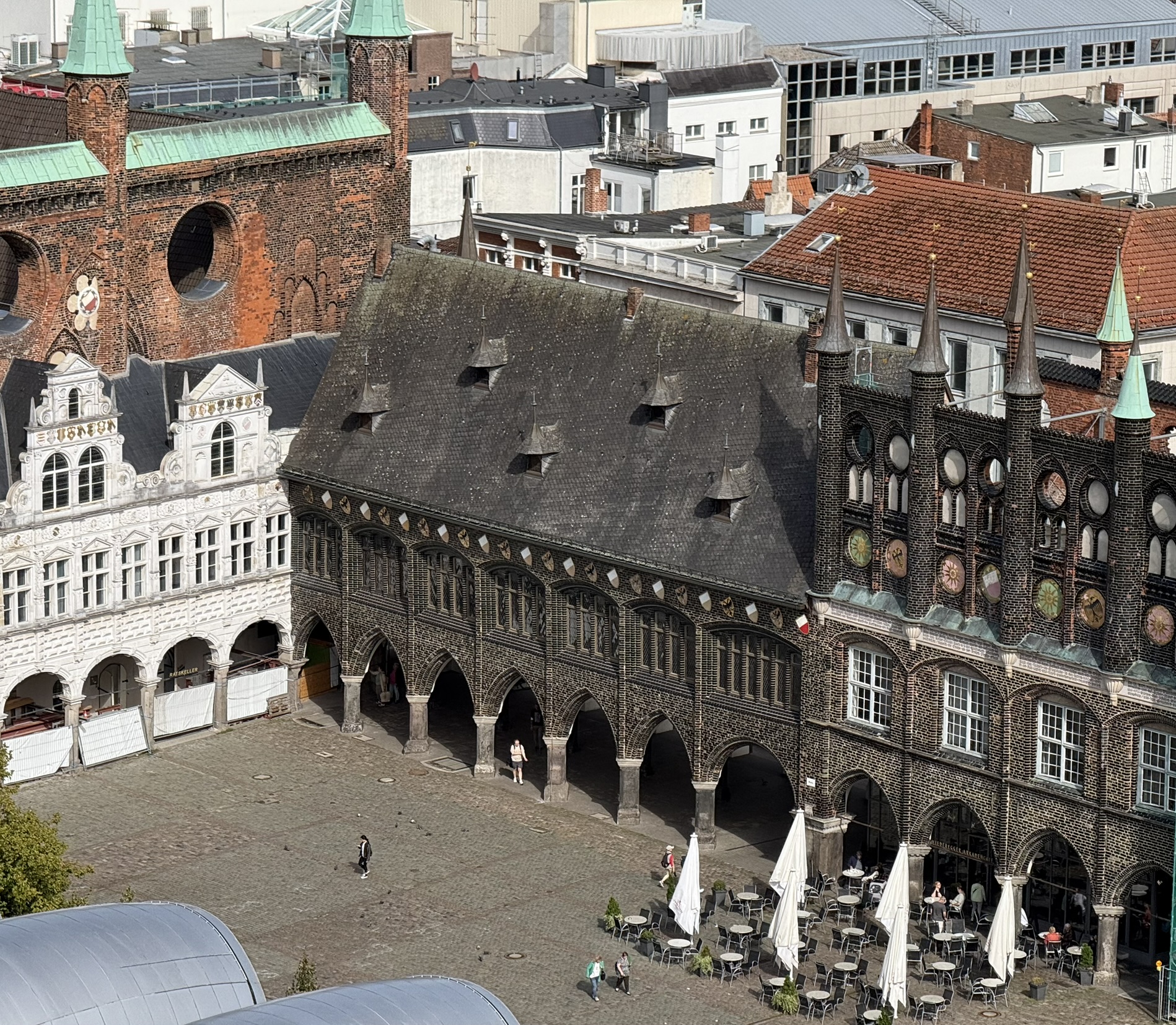
The Hanseatic architecture is well preserved (or restored) throughout the old town, which is situated on an island surrounded by the Trave River.
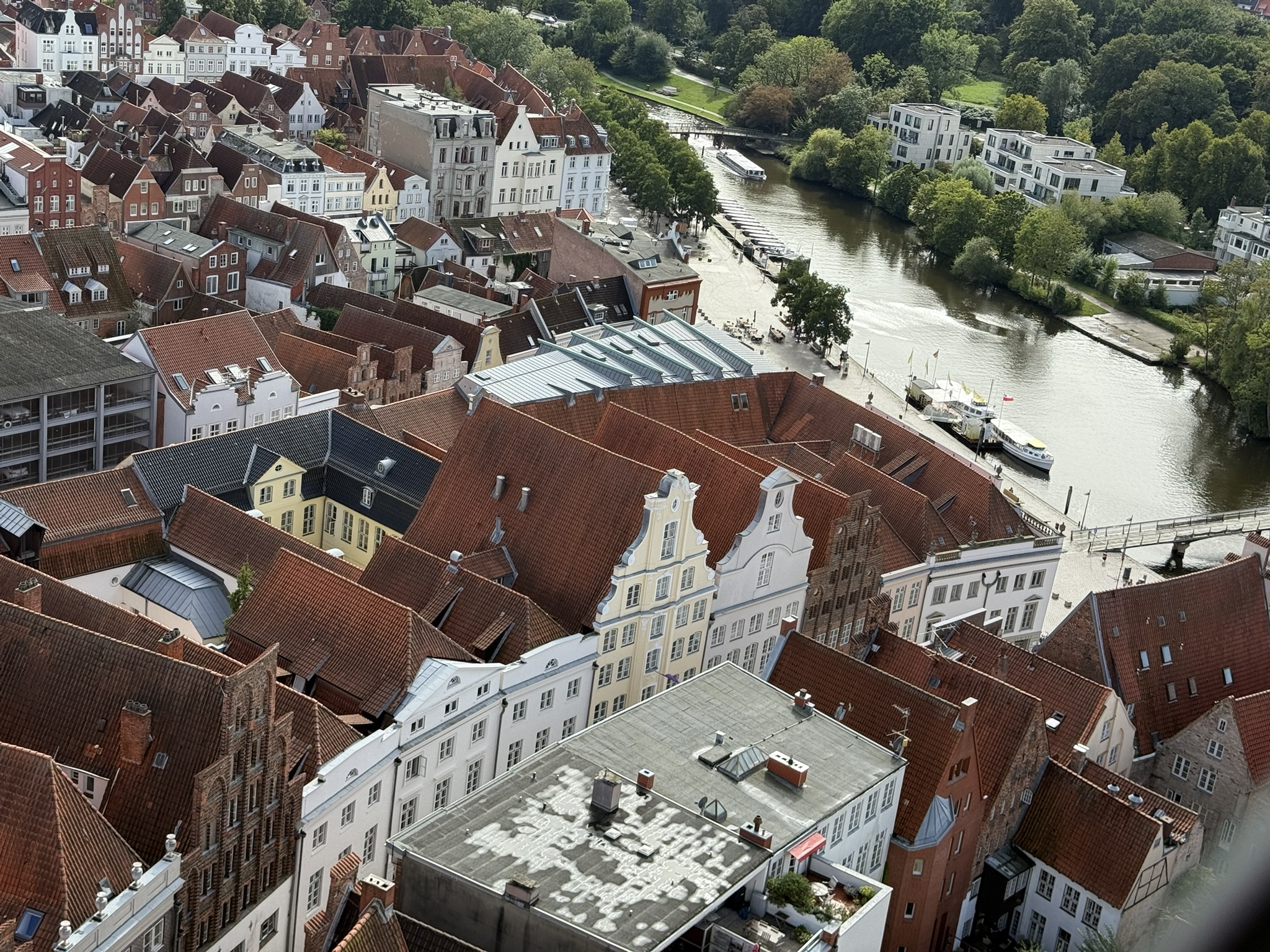
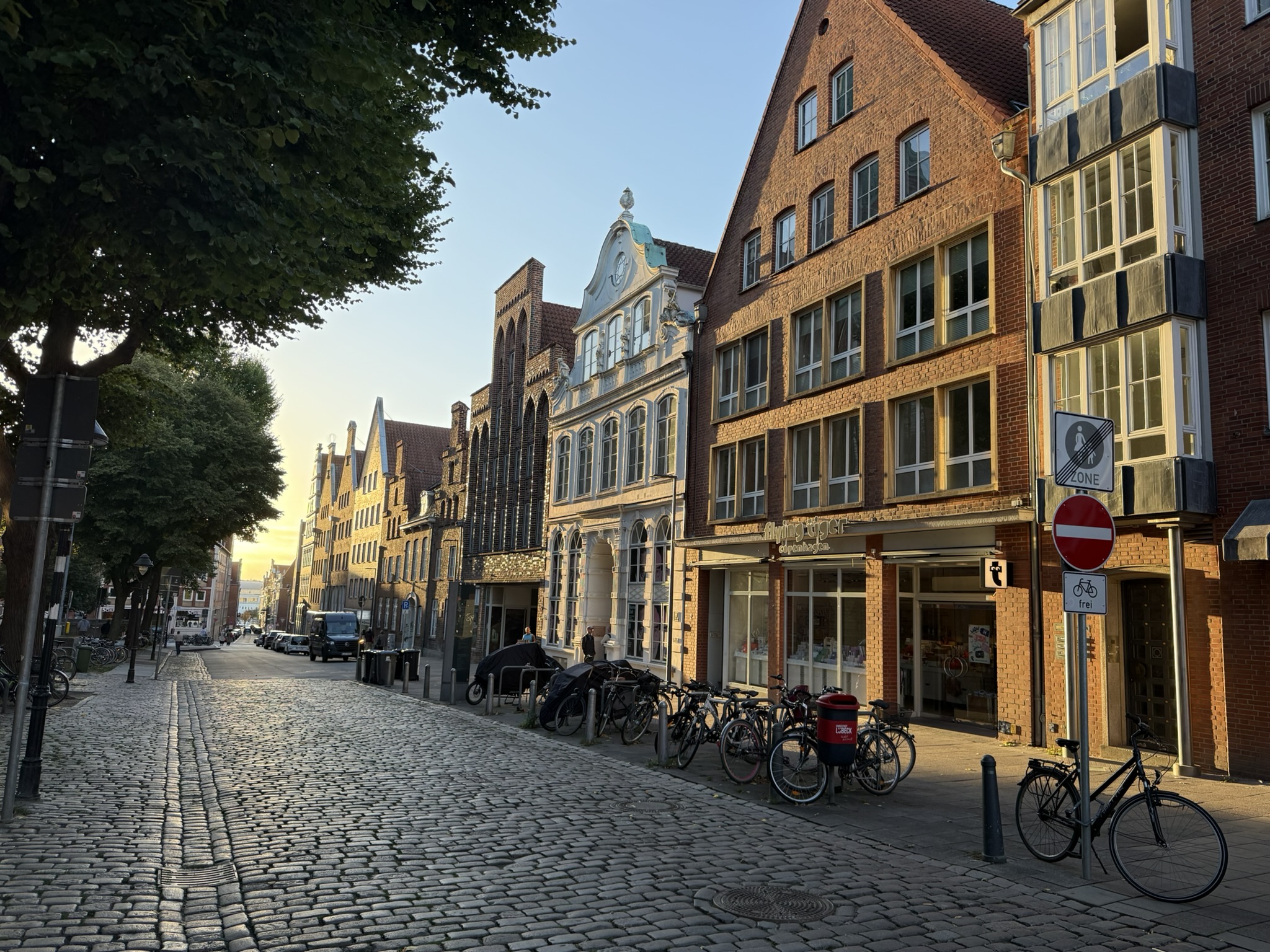
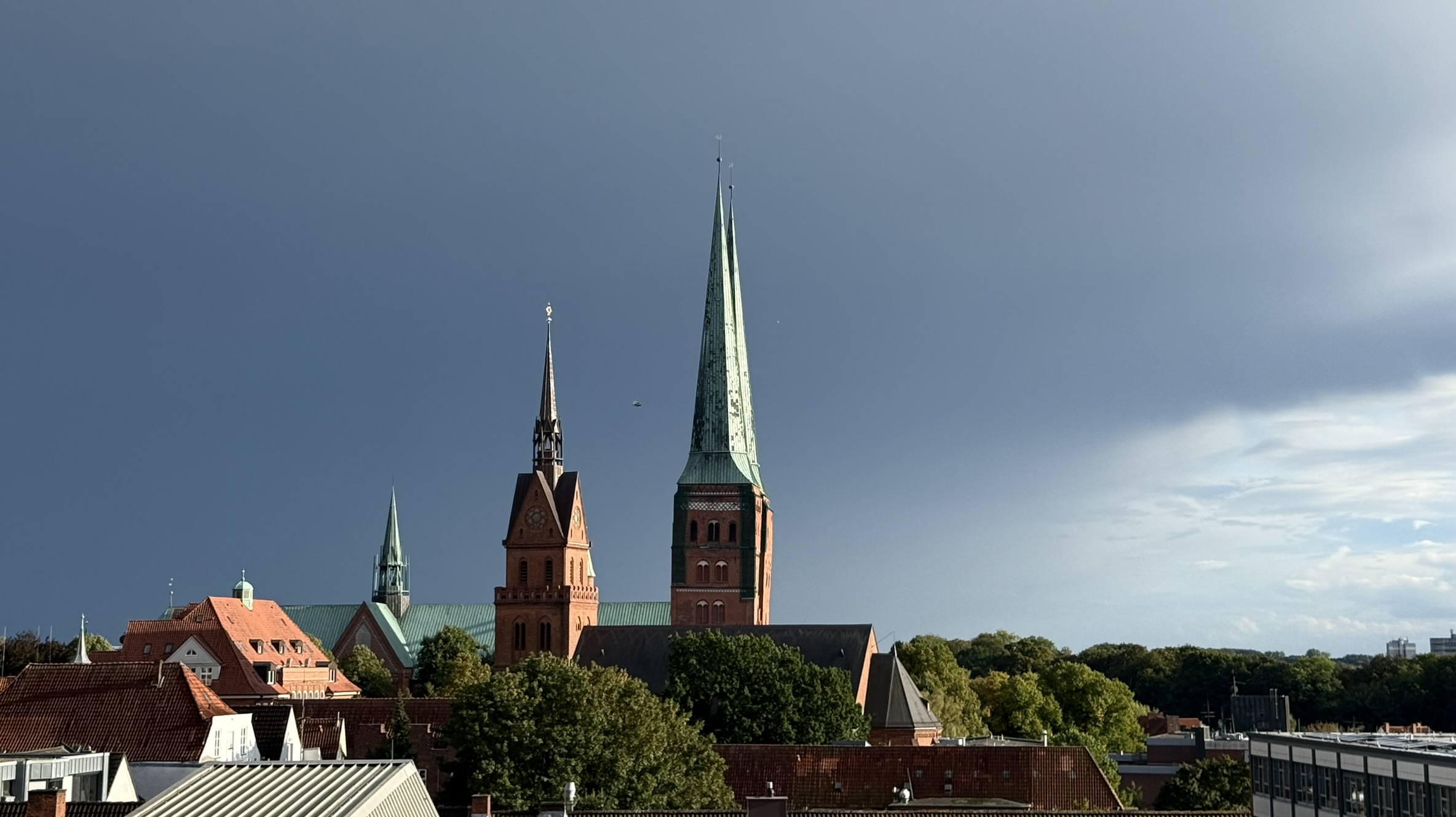
Within the compact old town are six churches which exceed 100 metres, not least the Cathedral which was reconstructed after being badly damaged in World War Two
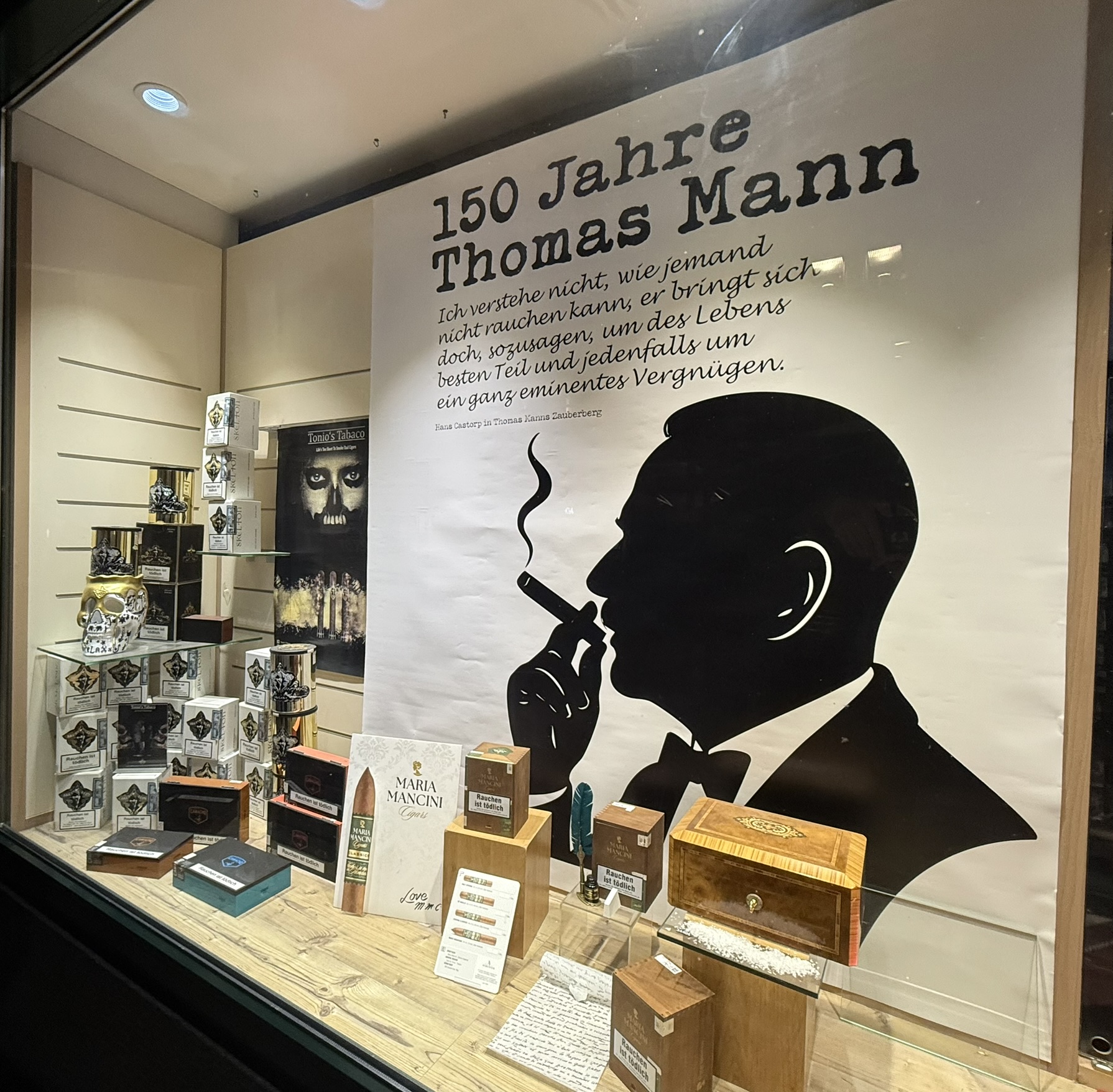
Two of Lubeck’s more famous citizens include Willy Brandt, a staunch anti-Nazi and later German chancellor between 1969-74, and who now has a dedicated museum in the old town, as well as Thomas Mann, the renowned writer, as celebrated in this shop window.
Dusseldorf
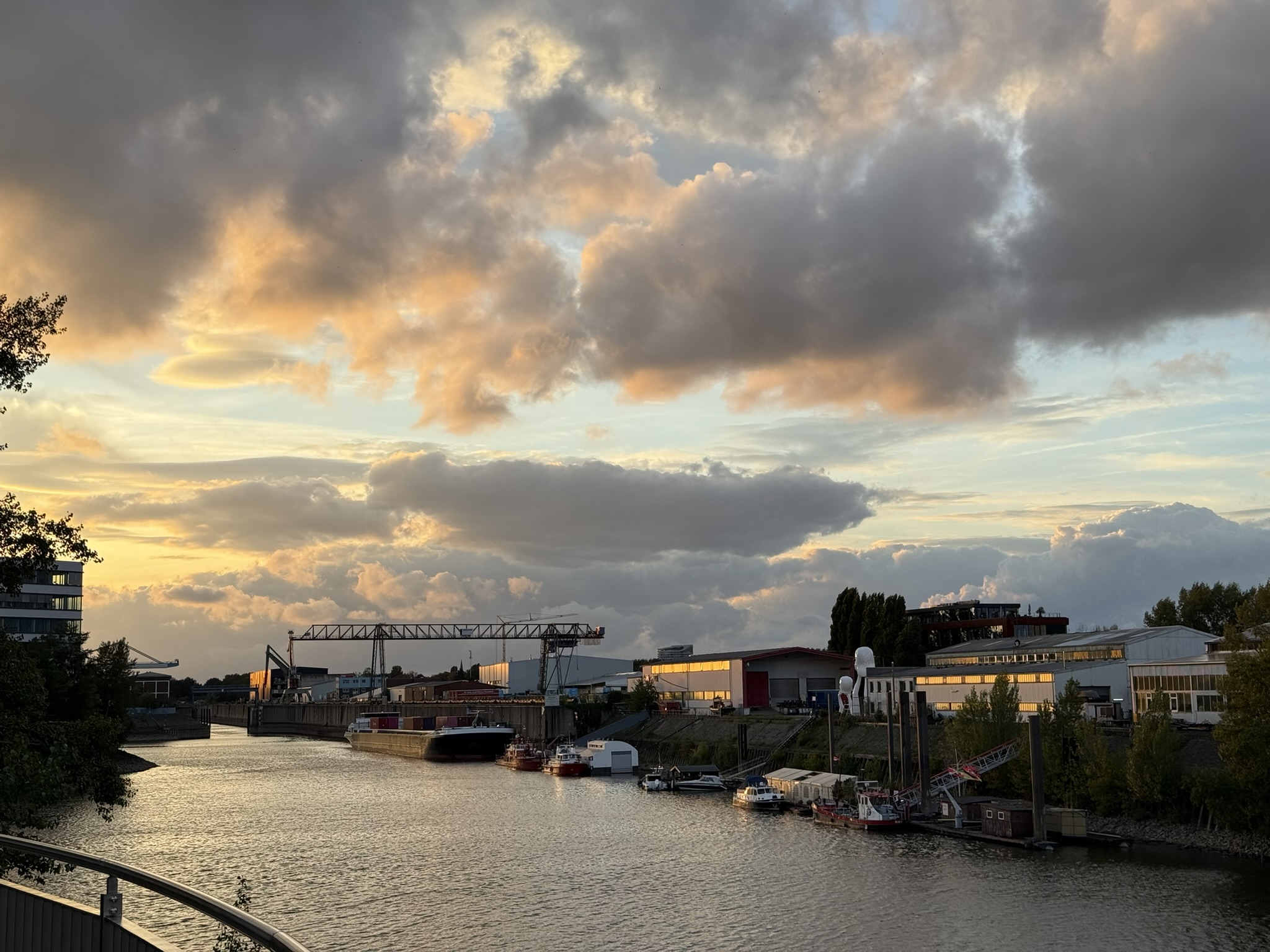
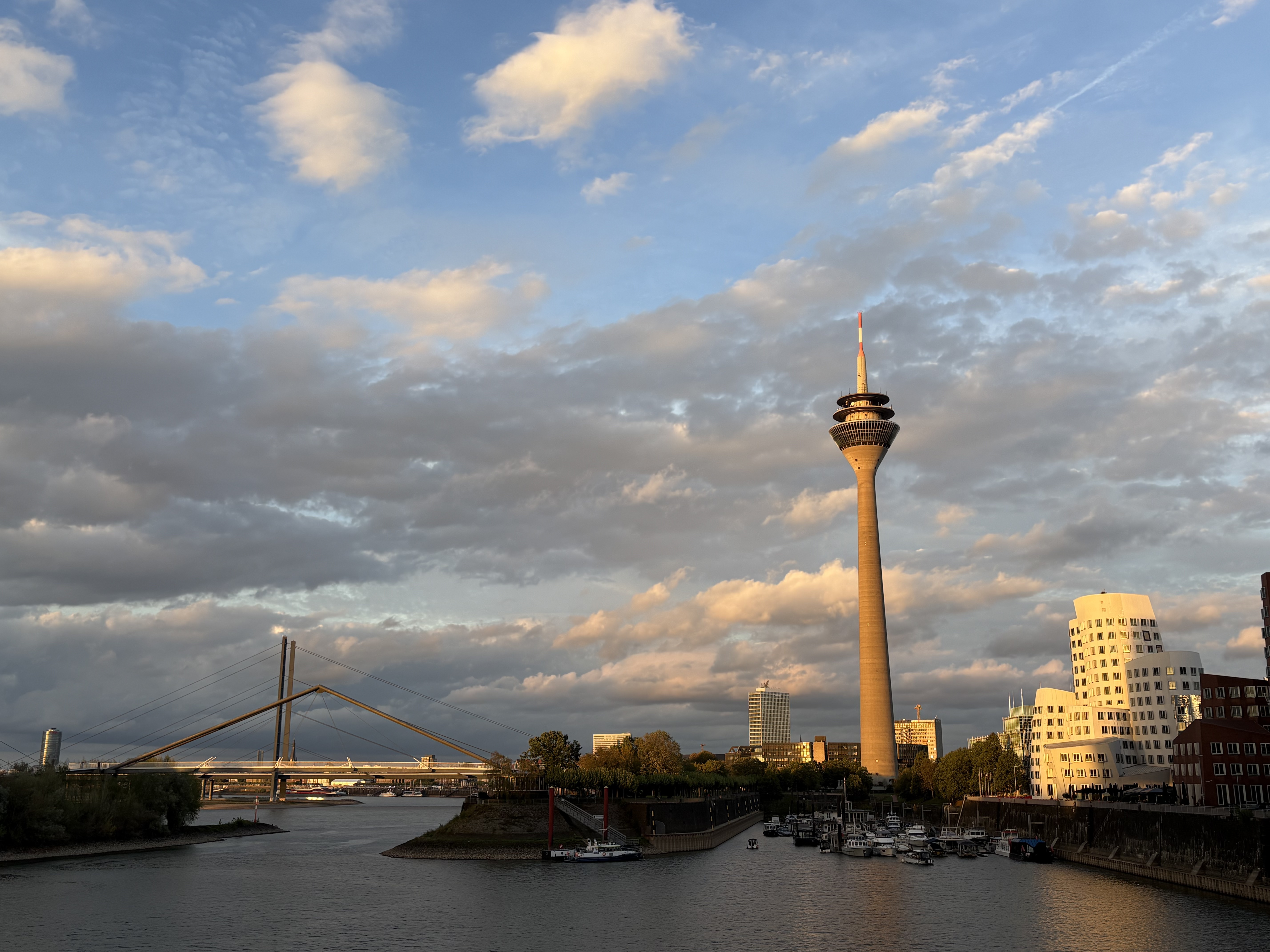
Dusseldorf, whilst now a major German city was never a member of the Hanseatic League. Its location on the Rhine led to industrial growth from the 1800s. Like many European cities whose docks have declined or been abandoned in recent decades, the city’s docks (known as the Hafen or harbour district) are now undergoing redevelopment with an influx of new businesses, apartments and services.
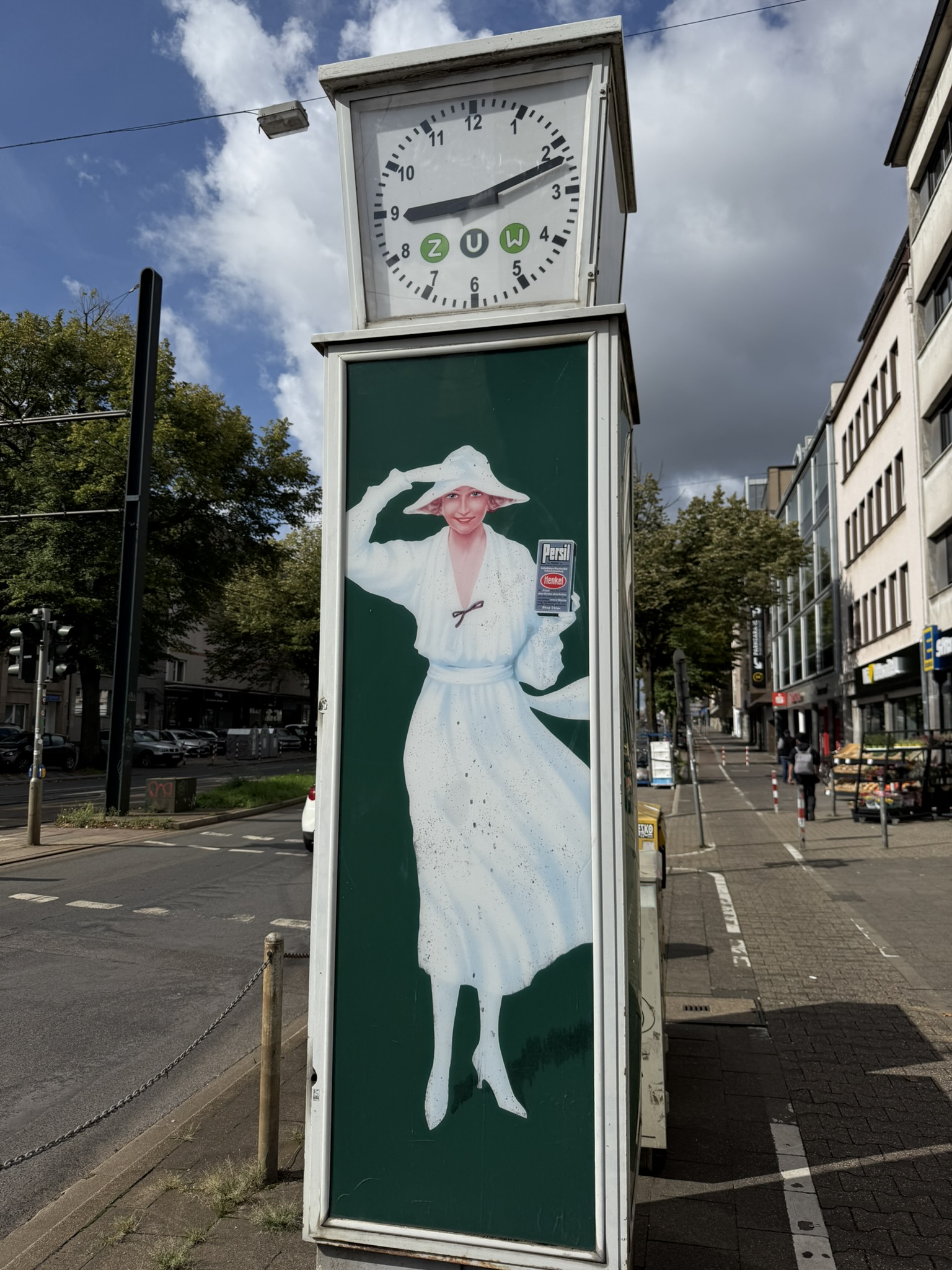
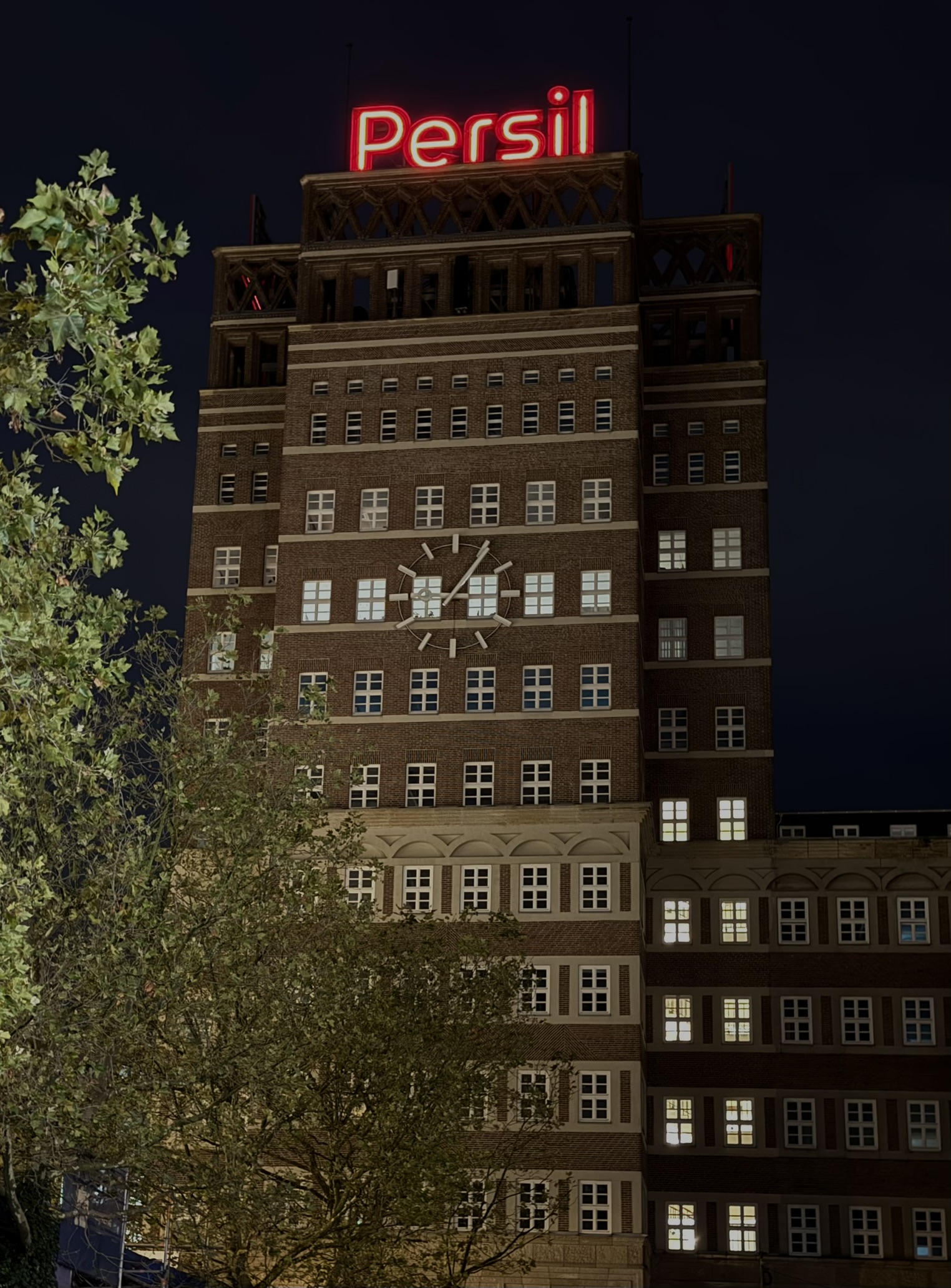
Probably the city’s most famous product is the detergent Persil. First launched in 1907, the company’s HQ is still based in Dusseldorf, and its logo can be seen on top of Wilhelm Marx house, one of Europe’s earliest high rise blocks.
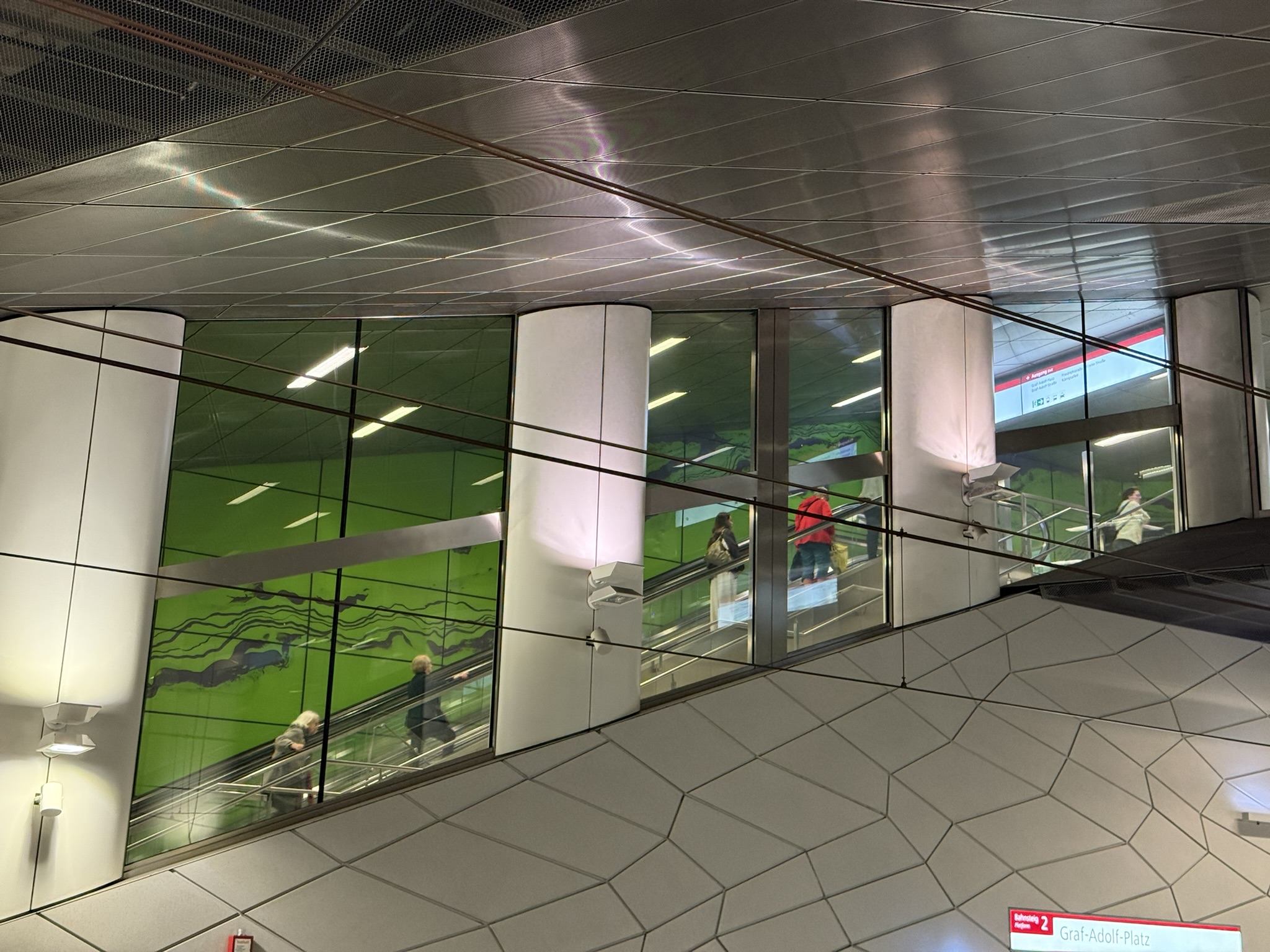
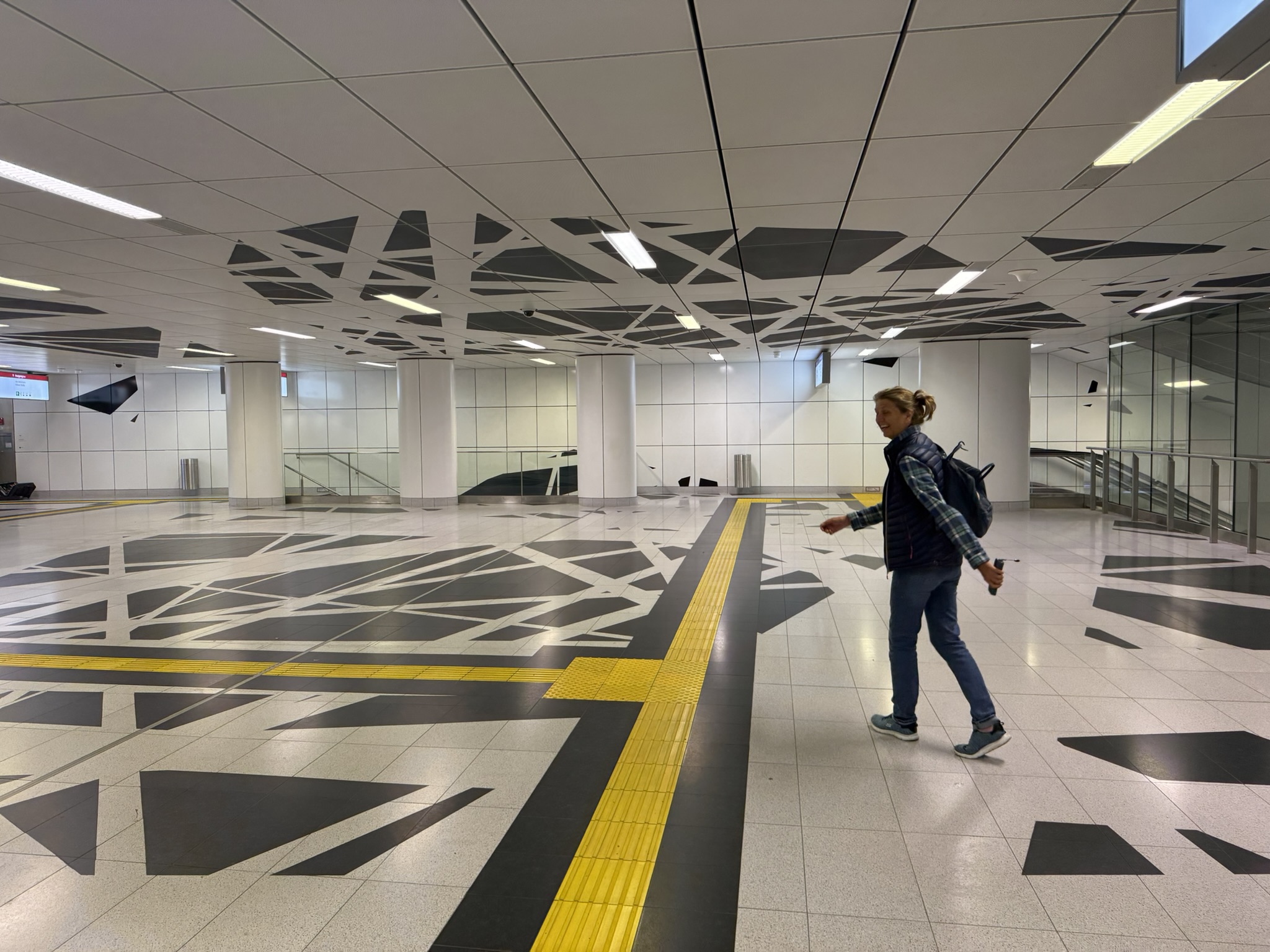
On a more contemporary note, getting around the city has been been made much more enjoyable with the opening in 2016 of the Wehrhahn Metro line, comprising six futuristic ad free subway stations
Wuppertal
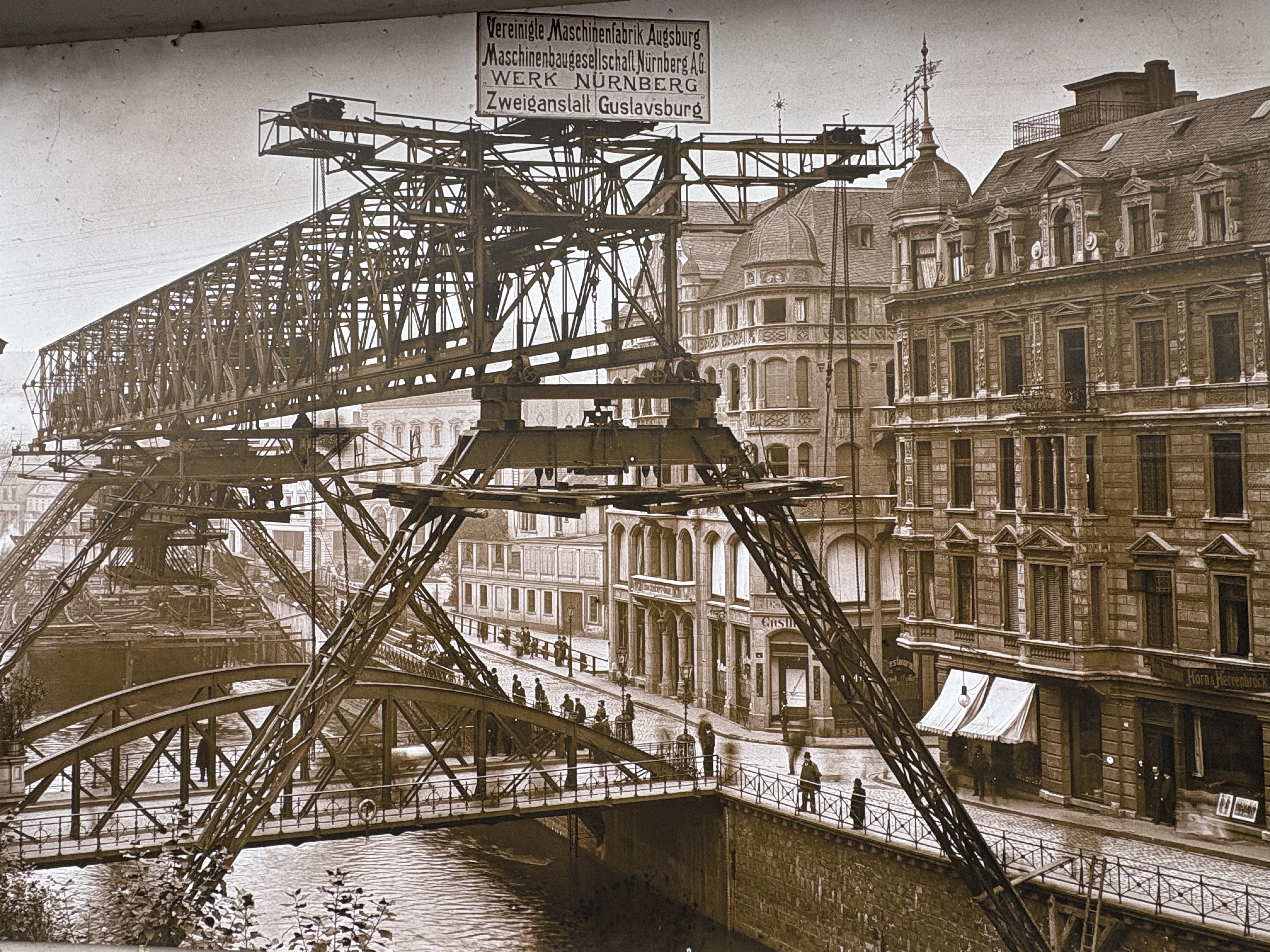
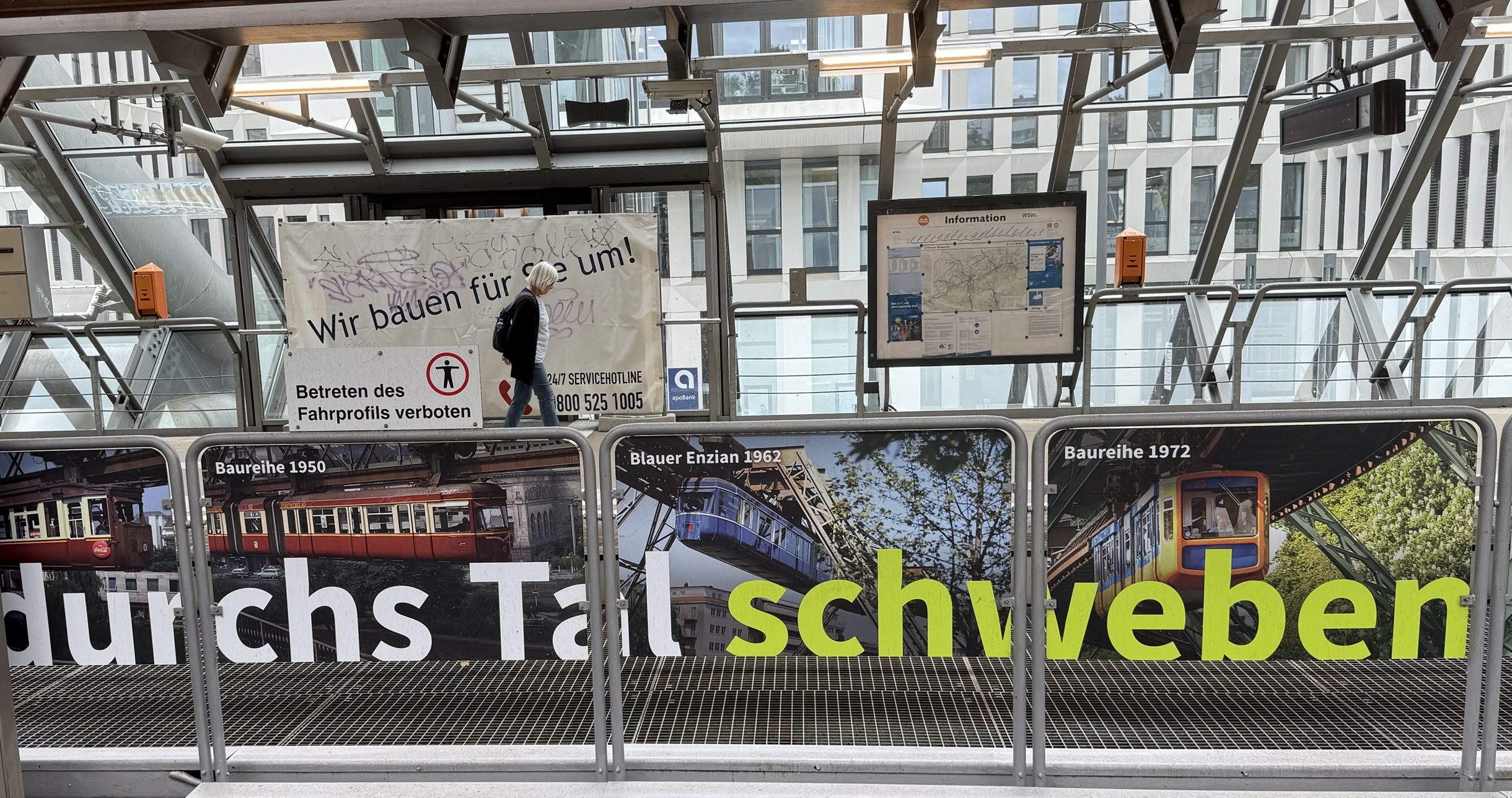
A short train ride from Dusseldorf in the valley of the Wupper River lies the industrial city of Wuppertal. It started as a textile centre but soon developed other industries, most notably Bayer, the global pharmaceutical company, whose HQ is still in the city. Despite all of the industry, Wuppertal ranks as Germany’s greenest city. As a visitor, the undoubted main attraction is the Scebebahn (or ‘floating tram’) – a suspended monorail dating from 1901 which runs for over 8 miles above the Wupper river and sections of the valley main road. It provides spectacular views of the city and surrounding valley.
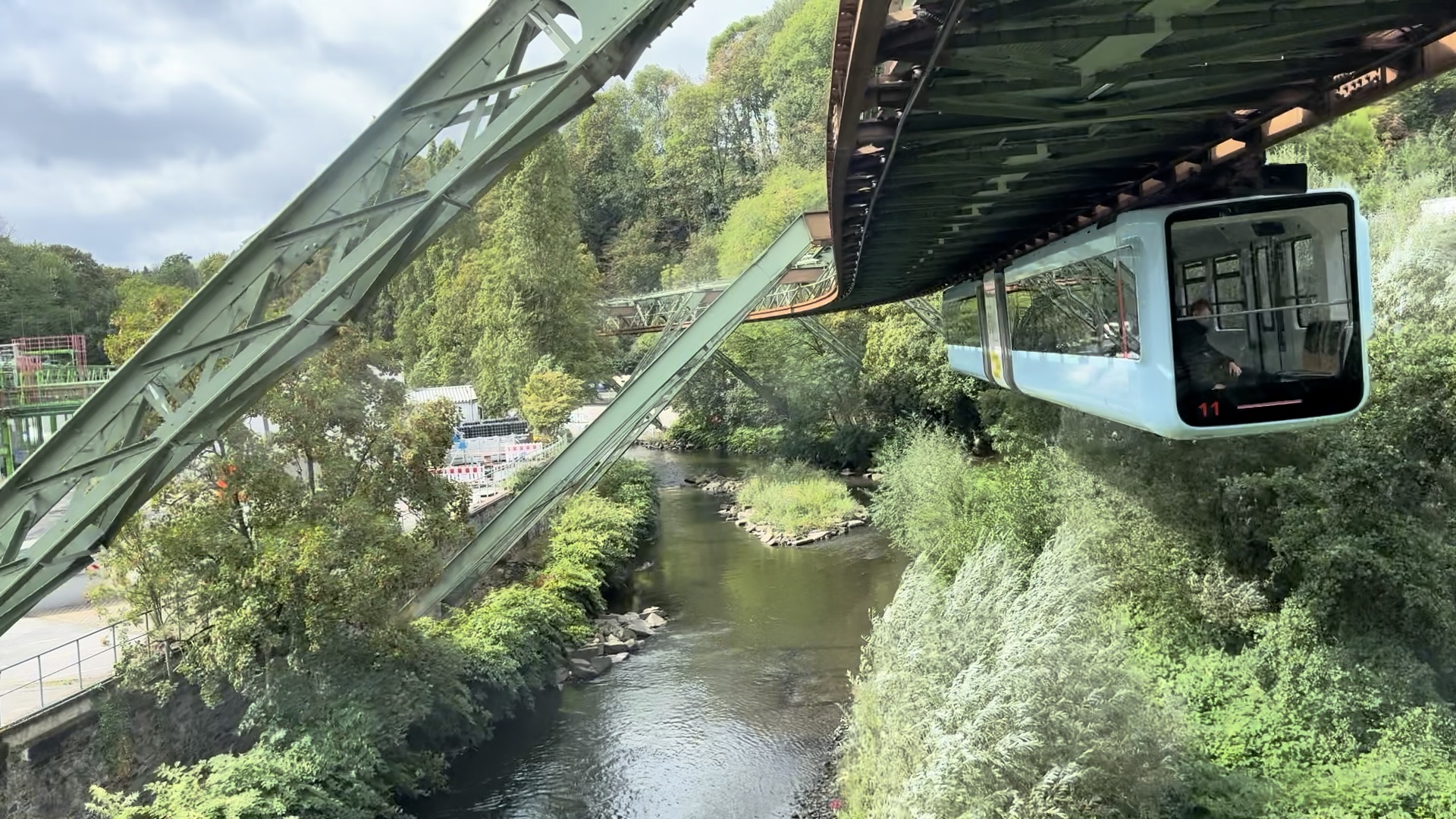
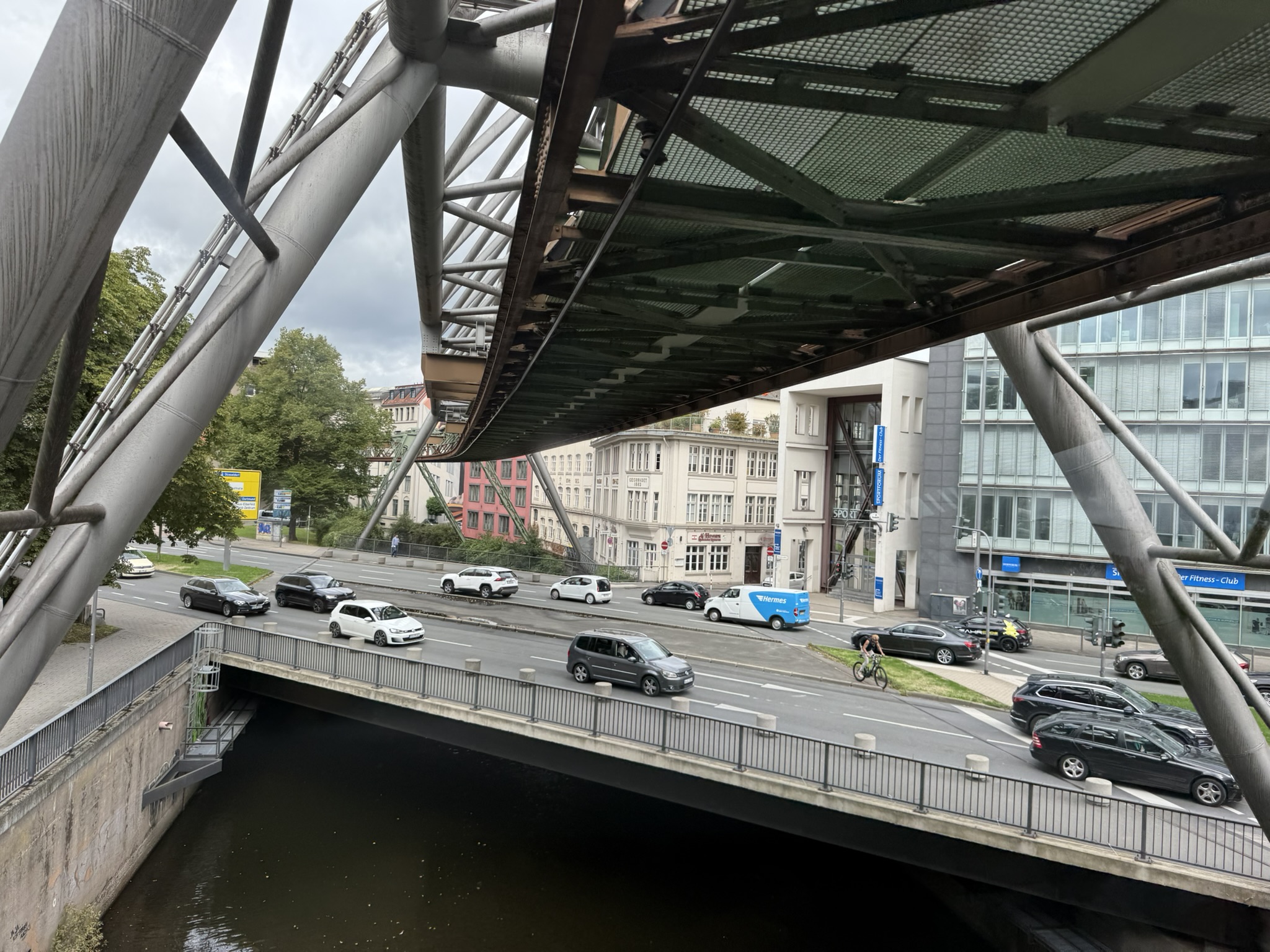
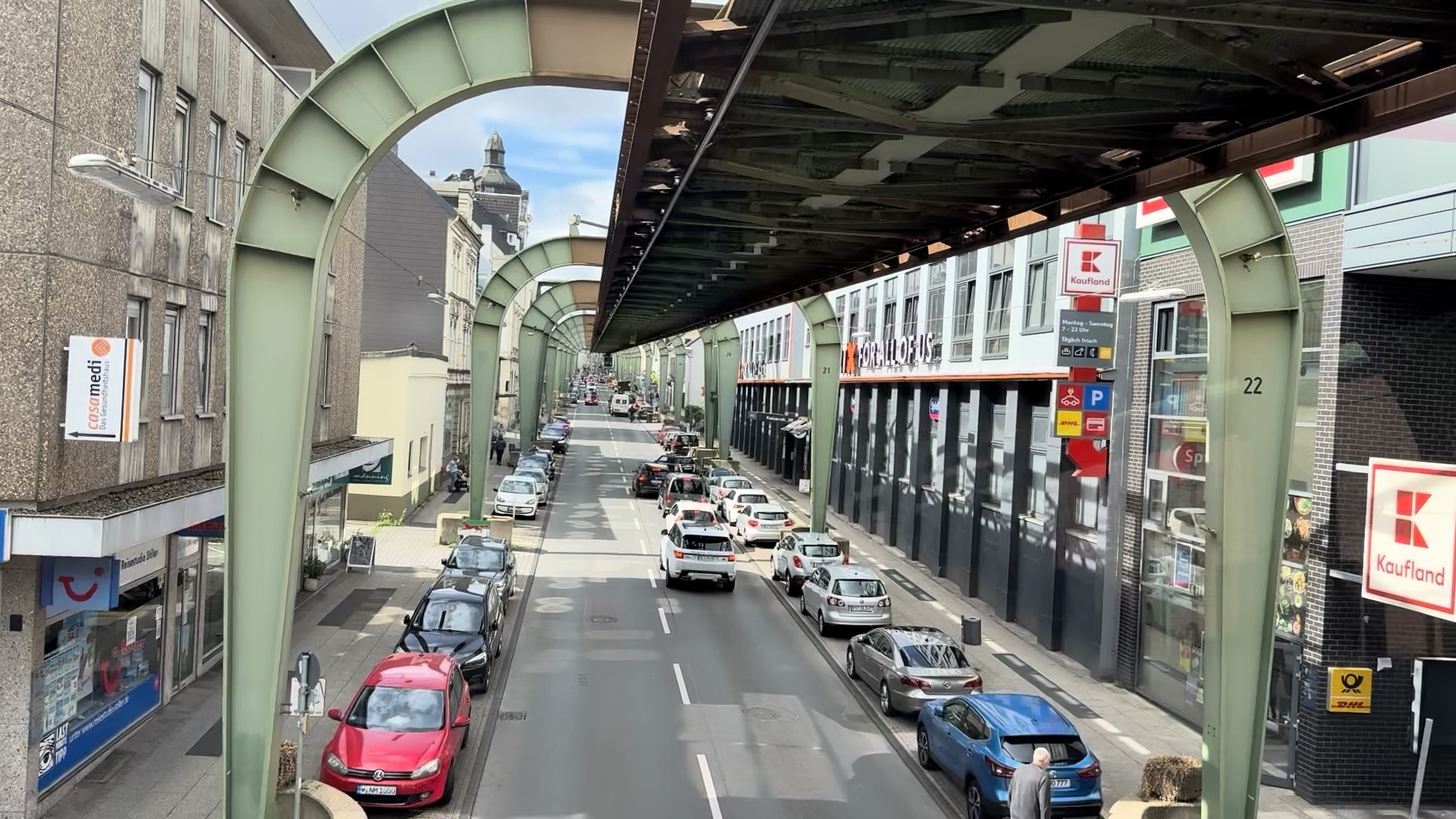
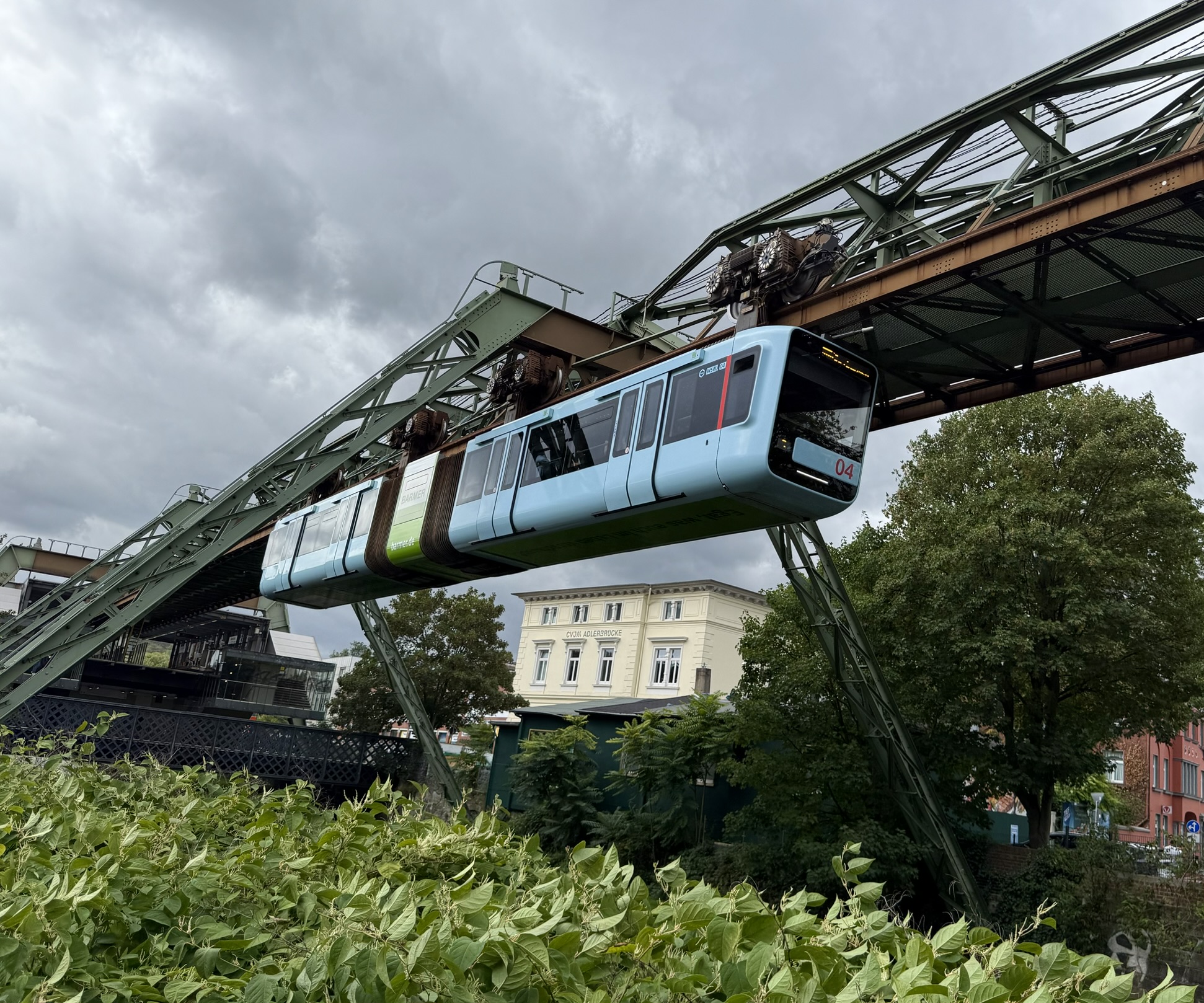
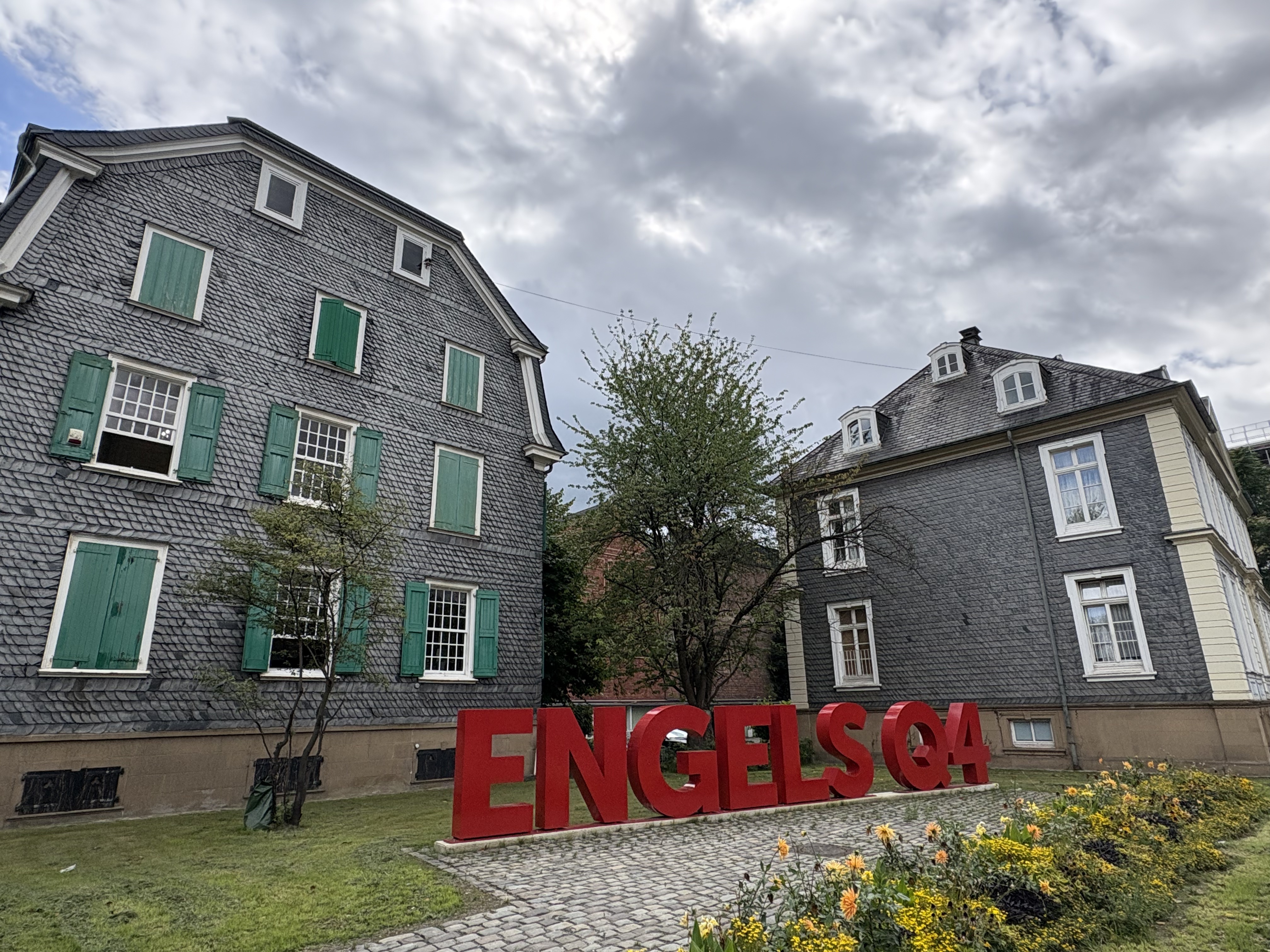
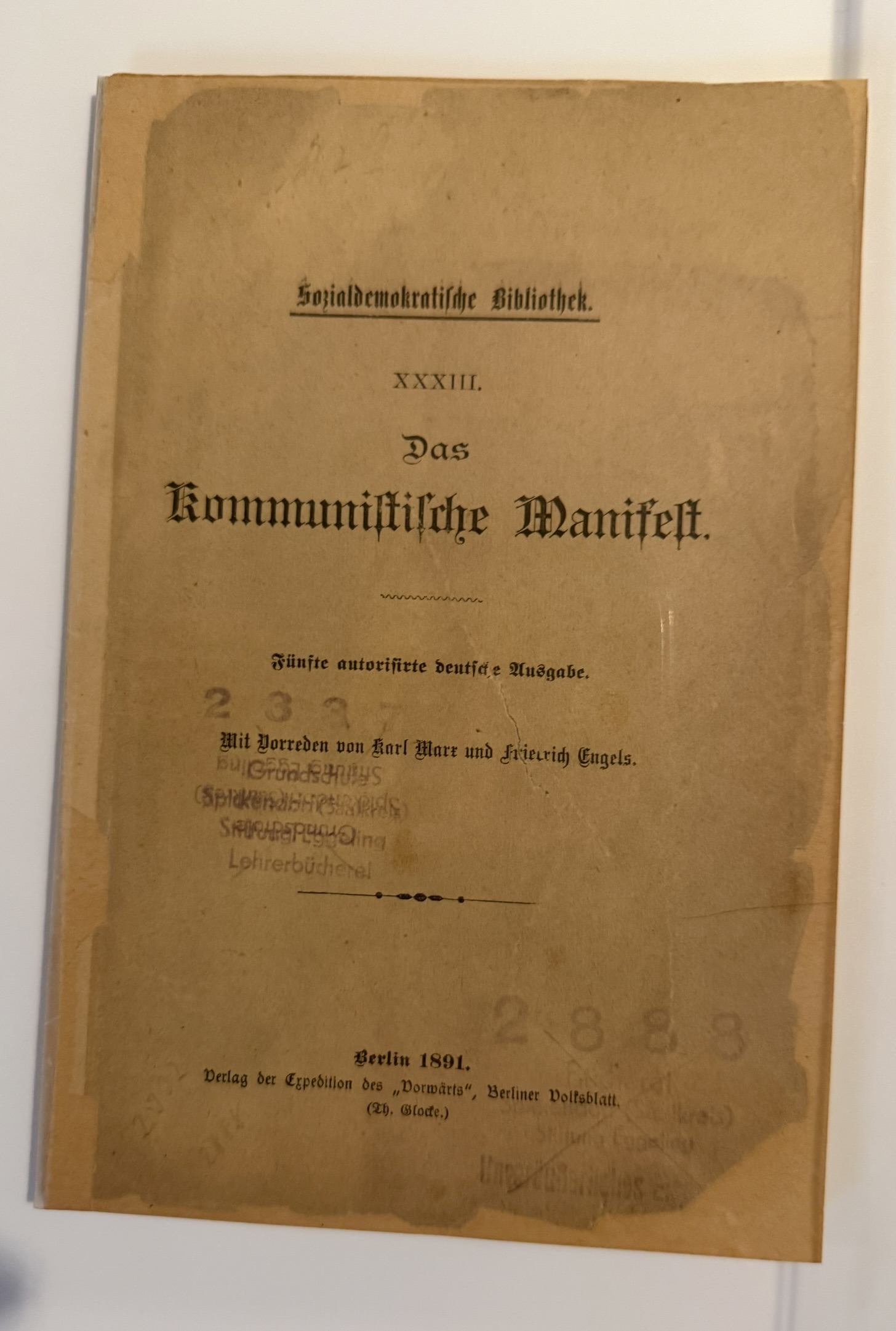
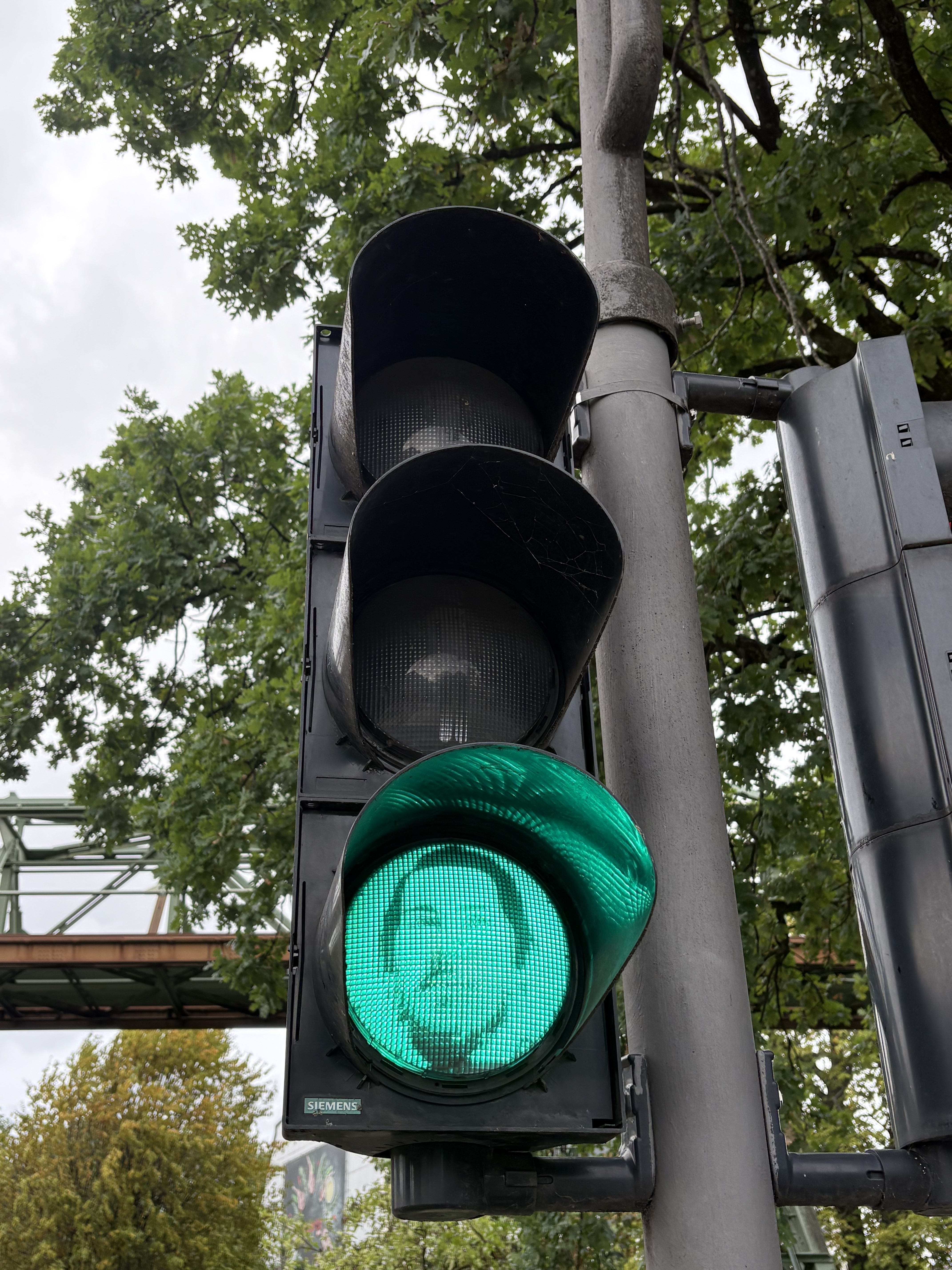
Along the ride we stopped off to visit the childhood home of Fredrich Engels, who famously collaborated with Karl Marx in diagnosing the ills of capitalism. The museum collection includes a first edition of the Communist Manifesto. The traffic lights at a nearby pedestrian crossing show an image of a young Engels
Cologne
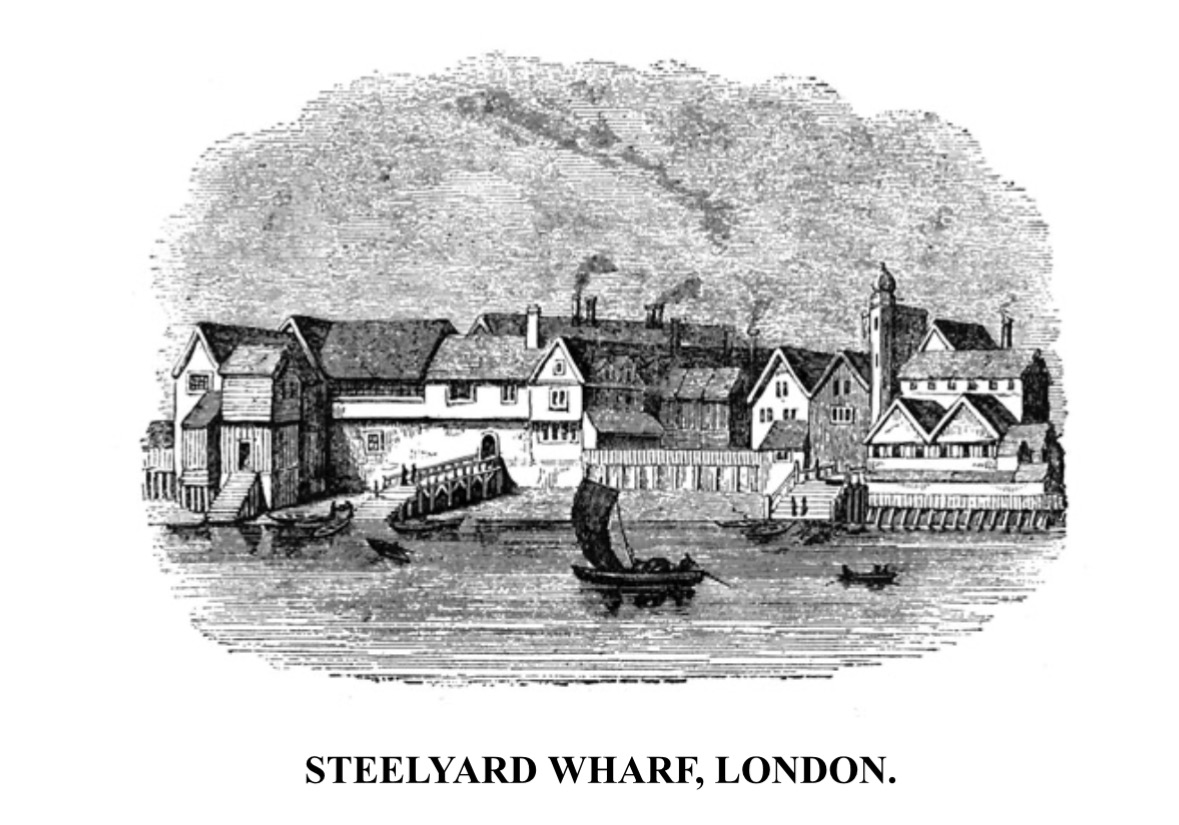
Cologne was the leading Member of the Hanseatic League in the Rhineland region of Germany and helped to found the Steelyard (or Stalhof) in the port of London which mostly traded in woollen products between the 13th and 16th centuries
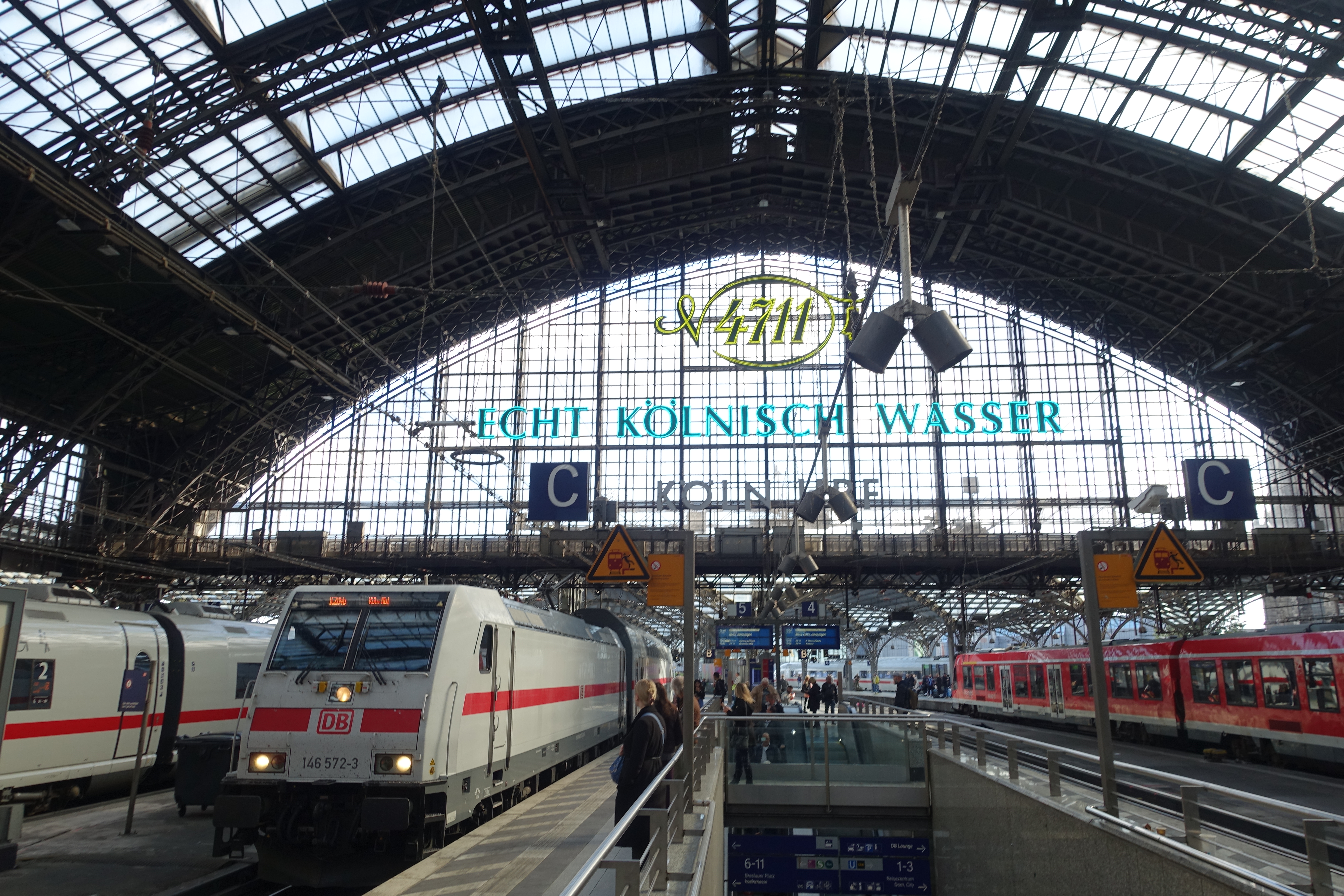
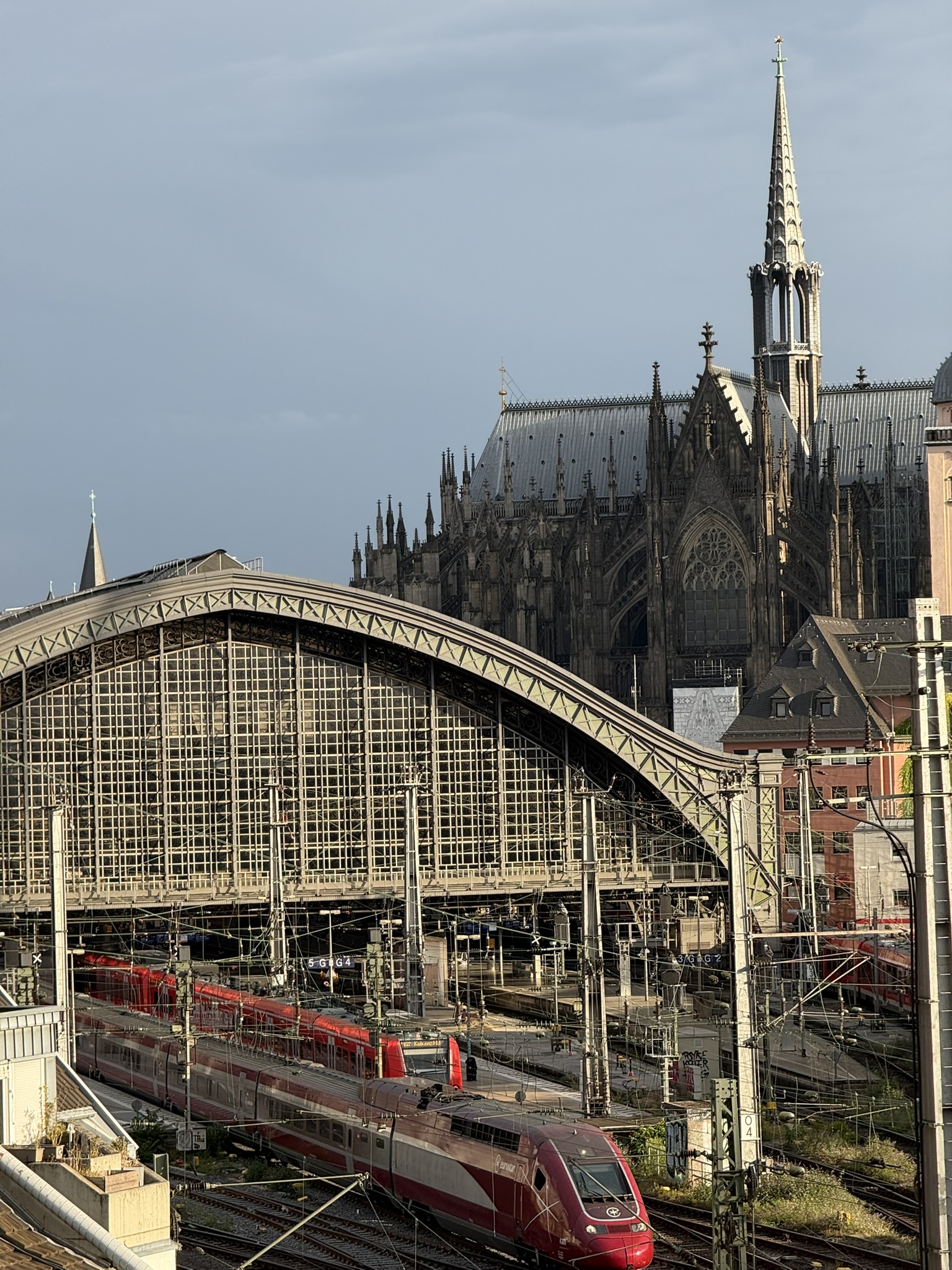
Because of the large scale destruction of the city during the Second World War, very little remains to illustrate Cologne’s Hanseatic past. However, the magnificent railway station, which sits alongside the Cathedral, makes for a grand exit on the train back to London


About the author BJD
-

April 18, 2025
-
August 10, 2024
-

November 17, 2023
All posts by BJD →The Slow Train to Vichy
Northern Ireland: A Contested History
Ten of Europe’s most beautiful train stations